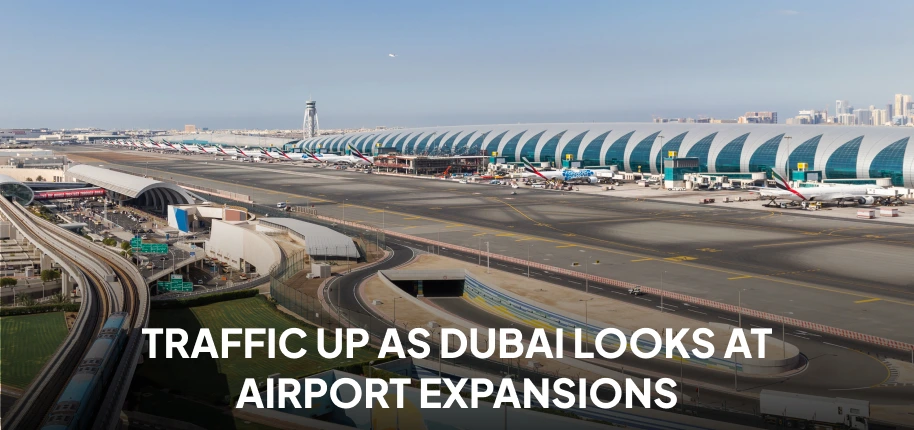
Dubai’s aviation industry continues to strengthen as rising passenger traffic creates new opportunities for airport expansion, infrastructure investment and economic development. With Dubai International Airport (DXB) operating as one of the world’s busiest international aviation hubs, the emirate is investing in long-term capacity to accommodate future demand. The Dubai airport expansion strategy is not simply about handling more passengers – it is also about strengthening global connectivity, supporting tourism and creating opportunities for businesses operating across logistics, hospitality, retail and international trade.
Dubai’s Airport Traffic Continues to Grow
Dubai has established itself as a major international aviation centre, connecting businesses and travellers across Europe, Asia, Africa and the Americas.
Dubai International Airport handled approximately 92.3 million passengers in 2024, reflecting strong international travel demand and the emirate’s continued appeal as a global destination.
The increasing number of travellers highlights the importance of Dubai’s aviation infrastructure in supporting economic activity. Passenger growth is closely connected to tourism, business travel, international events and the expansion of commercial activities across the UAE.
Several factors continue to support Dubai’s aviation performance
- International connectivity – Extensive flight networks connect Dubai with major global markets.
- Tourism demand – Hotels, attractions, shopping destinations and entertainment facilities attract international visitors.
- Business travel – Dubai’s growing commercial environment encourages corporate travel and international investment.
- Strategic location – The emirate provides convenient connections between major global regions.
- Airline expansion – Emirates and flydubai contribute to Dubai’s international aviation network.
As passenger volumes increase, infrastructure development becomes essential to maintaining operational efficiency and service quality.
Why Dubai Is Investing in Airport Expansion
The Dubai airport expansion strategy reflects the emirate’s ambition to prepare its aviation infrastructure for decades of economic and population growth.
Dubai International Airport operates within a developed urban environment, making substantial physical expansion increasingly challenging.
Rather than relying entirely on DXB, Dubai is directing major long-term investment towards Al Maktoum International Airport at Dubai South.
The expansion is intended to provide significantly greater passenger and cargo capacity while supporting the development of surrounding commercial districts.
Al Maktoum International Airport Expansion
In April 2024, Dubai approved plans for a new passenger terminal at Al Maktoum International Airport, with an estimated investment of AED 128 billion.
The wider development is designed to accommodate up to 260 million passengers annually when fully completed, although this represents a long-term capacity target rather than an immediate operational figure.
The project includes plans for
- Five parallel runways.
- Approximately 400 aircraft gates.
- Advanced passenger handling facilities.
- Improved transport connections.
- Expanded aviation and logistics infrastructure.
The project is expected to strengthen Dubai’s ability to accommodate future passenger demand while supporting wider economic development.
Also read – Best Free Zones in Dubai for Startups
How Dubai Airport Expansion Supports Economic Growth
Airport development has implications far beyond aviation. Improved international connectivity can encourage investment, facilitate trade and increase demand for commercial services.
Dubai’s economy benefits from the relationship between transport infrastructure and industries such as tourism, logistics, real estate and financial services.
Tourism and Hospitality Development
Dubai’s tourism sector depends heavily on reliable international air connectivity.
Additional airport capacity could make it easier to accommodate increasing visitor numbers, particularly during peak travel periods and major international events.
Growing visitor demand can support:
- Hotel and resort development.
- Restaurants and hospitality businesses.
- Travel agencies and tourism operators.
- Retail and entertainment establishments.
- Transportation and passenger services.
As Dubai expands its aviation infrastructure, tourism-related businesses may benefit from greater market accessibility and stronger visitor spending.
Logistics and International Trade
Dubai’s geographical position makes it an important centre for international cargo transportation and distribution.
Airport expansion can strengthen the emirate’s logistics capabilities by supporting more efficient cargo handling and connections between air, sea and land transport networks.
This is particularly relevant for businesses involved in e-commerce, freight forwarding, warehousing and international distribution.
Companies considering operations in Dubai can evaluate suitable licensing and infrastructure options through professional business setup services in Dubai.
Dubai South’s Growing Role in Aviation Development
Dubai South is expected to become increasingly important as Al Maktoum International Airport expands.
The district has been developed around aviation, logistics, commercial activity and residential infrastructure, creating an environment intended to support businesses operating near major transport facilities.
Airport development may encourage further investment in commercial properties, warehouses, offices and supporting infrastructure.
Opportunities for Businesses in Dubai South
The expansion creates potential opportunities across several industries.
| Business Sector | Potential Opportunity |
|---|---|
| Logistics and Freight | Cargo handling, storage and international distribution |
| Hospitality | Accommodation and services for travellers |
| E-Commerce | Warehousing and fulfilment operations |
| Aviation Services | Aircraft support, maintenance and related services |
| Retail and Commercial | Shops, offices and passenger-focused services |
Businesses should assess licensing requirements, operational costs and market demand before committing to a particular location.
What Airport Expansion Means for Foreign Investors
Dubai’s airport infrastructure investments demonstrate the emirate’s long-term commitment to international connectivity and economic diversification.
For foreign investors, improved aviation capacity may strengthen access to regional and international markets.
The potential advantages extend beyond transportation.
Improved Market Accessibility
Businesses operating in Dubai can benefit from international flight connections that support commercial relationships, customer access and supply chain management.
Greater Commercial Infrastructure
Airport-related development can encourage investment in offices, industrial facilities, logistics centres and supporting services.
Opportunities Across Multiple Industries
Aviation growth may generate additional demand for professional services, technology solutions, hospitality operations and commercial activities.
Long-Term Business Development
Major infrastructure projects can support economic activity over extended periods, although individual investment outcomes depend on market conditions and business performance.
Foreign entrepreneurs interested in entering the UAE market can consider mainland and free zone structures depending on their operational requirements.
Challenges Associated With Rapid Aviation Growth
Although airport expansion creates economic opportunities, large infrastructure projects also involve challenges.
Managing passenger demand, maintaining service standards and coordinating transport networks require careful planning.
Infrastructure and Transport Connectivity
As passenger numbers increase, roads, public transportation and supporting facilities must develop alongside airport operations.
Efficient connections between airports, commercial districts and residential communities will remain important for managing future demand.
Environmental Sustainability
Aviation expansion also raises questions about energy consumption, emissions and environmental performance.
Dubai’s airport development plans incorporate modern infrastructure and operational technologies, but achieving long-term sustainability will depend on implementation and wider aviation-sector improvements.
Managing Development Costs
Large-scale airport projects require substantial financial investment and long construction timelines.
Maintaining commercial viability while responding to changing aviation demand will be important throughout the development process.
How Dubai Airport Expansion Strengthens Global Competitiveness
International aviation connectivity plays an important role in attracting multinational companies, investors and skilled professionals.
Dubai’s location between major economic regions provides an advantage for businesses requiring access to multiple markets.
By investing in airport capacity, the emirate aims to maintain its competitiveness against other international aviation hubs.
The expansion also supports Dubai’s broader economic ambitions, including the Dubai Economic Agenda D33, which seeks to strengthen the emirate’s position among the world’s leading urban economies.
Airport infrastructure is one component of this strategy, alongside investment in technology, tourism, trade and business development.
Future Outlook for Dubai’s Aviation Industry
Dubai’s aviation sector is positioned for continued development as international travel demand and infrastructure investment shape the market. The planned expansion of Al Maktoum International Airport represents a major shift in the emirate’s long-term aviation strategy. Over time, increased airport capacity could support stronger tourism activity, improved logistics capabilities and additional commercial investment.
However, the pace of development will depend on construction progress, global travel demand, airline operations and wider economic conditions. For businesses, the most important consideration is how improved connectivity may influence their target markets, operating costs and long-term growth opportunities.
Conclusion
Dubai airport expansion plans reflect the emirate’s commitment to strengthening international connectivity and preparing for future economic growth. Rising passenger traffic, major infrastructure investment and the development of Al Maktoum International Airport highlight the importance of aviation to Dubai’s wider economy.
For entrepreneurs and investors, these developments may create opportunities in logistics, hospitality, tourism and commercial services. Businesses considering expansion into the UAE should carefully evaluate their preferred location, licensing requirements and operational needs. For assistance with establishing a company, visit Contact Us to discuss suitable business setup options.