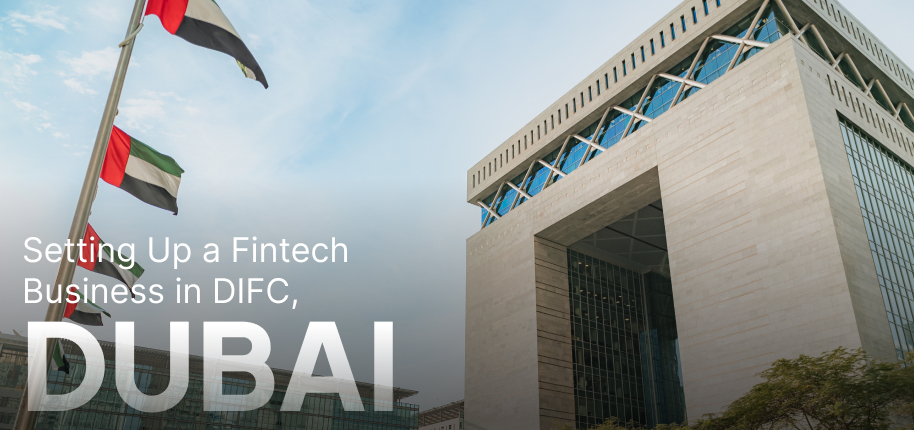
The global fintech industry has experienced explosive growth over the past decade, reshaping how payments, lending, wealth management, and financial services operate worldwide. However, as fintech innovation accelerates, many founders face increasing regulatory pressure in traditional markets, where outdated frameworks struggle to keep pace with digital finance. Against this backdrop, Dubai has emerged as a leading global fintech gateway, strategically positioned between Europe, Asia, and Africa. At the heart of this transformation lies the Dubai International Financial Centre (DIFC), a purpose-built financial hub offering a progressive regulatory environment, world-class infrastructure, and direct access to global markets. For entrepreneurs planning to establish a Fintech Business in DIFC, the free zone offers a rare combination of innovation-friendly regulation, international credibility, and long-term scalability.
Why Traditional Jurisdictions Struggle with Fintech Regulation?
Many established financial centres were designed for traditional banking and financial institutions, not agile fintech startups. As a result, founders often encounter significant obstacles.
-
Overregulation and Slow Approval Processes
Legacy jurisdictions typically rely on rigid approval systems that slow down licensing and product launches, limiting innovation. This often forces fintech startups to delay market entry or abandon innovative solutions altogether.
-
Limited Regulatory Sandboxes
Many countries lack structured testing environments where fintech solutions can be safely trialled under regulatory supervision. Without sandbox frameworks, businesses face greater compliance risks and fewer opportunities to validate products before a full-scale launch.
-
High Compliance Costs
Fintech startups often face the same regulatory burden as large financial institutions, increasing operational costs and entry barriers. These challenges make it difficult for innovative fintech companies to grow sustainably in conventional markets.
How DIFC Solves These Challenges for Fintech Businesses?
DIFC was explicitly created to address the limitations of traditional financial jurisdictions. As the Middle East’s leading global financial centre, DIFC operates under an independent legal and regulatory framework, based on English common law and overseen by globally recognised regulators. Strong government backing, combined with a forward-looking approach to innovation, makes DIFC one of the most attractive destinations for setting up a Fintech Business in DIFC.
What Is DIFC and Why Does It Matter for Fintech Companies?
The Dubai International Financial Centre (DIFC) is a globally integrated financial hub hosting banks, asset managers, fintech firms, and professional services companies from over 75 countries. DIFC plays a central role in driving financial innovation across the region, supported by initiatives such as
- DIFC Innovation Hub – the region’s largest innovation ecosystem
- FinTech Hive – a leading accelerator connecting startups with financial institutions
These platforms provide fintech founders with access to mentorship, funding, and enterprise partnerships.
Which Fintech Activities Are Permitted in DIFC?
DIFC supports a wide range of fintech activities, subject to regulatory approval
- Digital payments and remittances
- Blockchain and crypto-related services (case-by-case approval)
- Insurtech, RegTech, and WealthTech platforms
- Digital banking, lending, and crowdfunding solutions
This flexibility allows founders to tailor their Fintech Business in DIFC to both regional and global markets.
Why the DFSA Regulatory Framework Is Fintech-Friendly?
The Dubai Financial Services Authority (DFSA) regulates all financial activities within DIFC and is widely respected for its balanced, innovation-led approach. Unlike rigid compliance models, DFSA applies risk-based regulation, aligning oversight with the nature and scale of the business. A key innovation is the Regulatory Sandbox and Innovation Testing Licence(ITL), which allow fintech companies to test solutions in a controlled environment before full licensing.
-
Choosing the Right Legal Structure for a Fintech Business in DIFC
Selecting the correct legal structure is critical for regulatory approval and long-term scalability.
-
DIFC Private Company Limited by Shares (LTD)
Ideal for startups and growth-stage fintech companies seeking flexibility and investor readiness. This structure supports equity investment, shareholder arrangements, and long-term scalability.
-
Branch of a Foreign Fintech Company
Suitable for established international firms expanding into the Middle East. It allows parent companies to operate under their existing brand while accessing the DIFC’s regulated fintech ecosystem.
-
Special Purpose Vehicles (SPVs)
Often used for fintech-related structuring, IP holding, or investment vehicles. The right structure depends on whether your Fintech Business in DIFC is a startup, scale-up, or international expansion.
Understanding DIFC Fintech Licensing Options
DIFC offers several licensing pathways
- Innovation Testing Licence (ITL) – for early-stage fintech testing
- Full DFSA Financial Services Licence – for regulated financial activities
- Non-Regulated Technology Licence – for fintech software and platforms not offering financial services directly
Capital requirements and approval timelines vary depending on the licence type and business risk profile.
Step-by-Step Process to Set Up a Fintech Business in DIFC
Step 1 – Define Your Fintech Business Model and Activities
Clearly outline your services, target market, and regulatory classification. This helps determine whether your fintech activities fall under DFSA regulation or qualify for innovation testing.
Step 2 – Regulatory Assessment and DFSA Pre-Approval
Engage with DFSA early to confirm licensing requirements. Early engagement reduces approval risks and ensures your model aligns with regulatory expectations.
Step 3 – Company Incorporation in DIFC
Register the legal entity and obtain initial approvals. This step legally establishes your fintech business within the DIFC framework.
Step 4 – Office Space and Substance Requirements
Secure compliant office premises within DIFC. Physical presence is mandatory to meet substance, compliance, and operational requirements.
Step 5 – Licensing Approval and Compliance Setup
Appoint compliance officers, MLROs, and governance structures. Strong internal controls are essential for DFSA approval and long-term regulatory compliance.
Step 6 – Bank Account Opening and Operational Launch
Open corporate bank accounts and commence operations. Proper banking setup ensures smooth financial operations and regulatory transparency from day one.
Capital, Compliance, and Substance Requirements in DIFC
A Fintech Business in DIFC must meet strict operational standards
- Minimum capital requirements based on licence type
- Appointment of compliance officers and MLROs
- Robust governance, risk, and AML frameworks
- Physical presence and economic substance within DIFC
DIFC vs Traditional Jurisdictions for Fintech Businesses
| Criteria | Traditional Jurisdictions | Fintech Business in DIFC |
| Regulatory Speed | Slow approvals | Faster, risk-based approvals |
| Innovation Support | Limited | Regulatory sandbox & ITL |
| Legal Framework | Local laws | Independent common law system |
| Banking Access | Restrictive | Fintech-friendly banks |
| Tax Environment | High tax exposure | 0% personal tax |
| Global Credibility | Varies | Internationally recognised |
Banking Challenges for Fintech Companies and How DIFC Helps
Fintech companies often face banking restrictions due to perceived risk. DIFC mitigates this by hosting banks experienced in fintech compliance and digital finance. Professional guidance significantly improves account approval rates and operational readiness.
Visa Options for Fintech Founders and Employees
DIFC supports multiple visa options
- Investor visas for founders
- Employment visas for technical, compliance, and management teams
- Dependent visas and long-term residency pathways
This enables fintech companies to build skilled, international teams.
Tax Advantages of Setting Up a Fintech Business in DIFC
Key tax benefits include
- 0% personal income tax
- Competitive corporate tax positioning
- VAT considerations based on service type
- Clear distinction between DIFC and mainland tax regimes
These incentives enhance profitability and reinvestment capacity.
Why DIFC Is a Global Hub for Fintech Investment?
DIFC attracts significant fintech investment through
- Venture capital and private equity networks
- DIFC FinTech Hive accelerator programmes
- Government-backed innovation funding
This ecosystem supports rapid scaling and global expansion.
How OADC Simplifies Fintech Business Setup in DIFC?
Open a Dubai Company (OADC) provides end-to-end support for setting up a Fintech Business in DIFC, including
- DIFC company formation and structuring
- DFSA licensing and regulatory advisory
- Banking, visa, and compliance assistance
- Ongoing post-setup and scaling support
OADC ensures founders remain compliant while focusing on innovation and growth.
DIFC’s Role in the Global Fintech Ecosystem
DIFC aligns closely with the UAE’s digital economy strategy and continues to lead in AI-driven financial services, blockchain solutions, embedded finance, and cross-border fintech innovation. Through future-focused policies and continuous regulatory evolution, DIFC has positioned itself as a long-term, sustainable home for fintech entrepreneurs seeking global scalability and technological advancement.
Conclusion
DIFC is the ideal destination for founders seeking a regulated yet innovation-friendly environment. A Fintech Business in DIFC benefits from global credibility, advanced regulation, tax efficiency, and access to capital. For startups, scale-ups, and international fintech firms, DIFC offers a future-proof foundation. With OADC’s expertise, founders can launch with confidence, navigate regulatory complexity, and build scalable fintech ventures in Dubai.