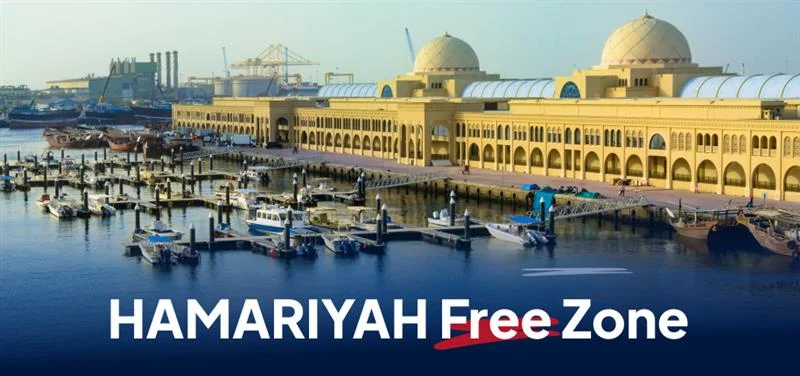
If you are looking for an industrial-grade, cost-effective base to launch or scale your business in the UAE, Hamriyah Free Zone (HFZ) deserves serious attention. Established in 1995 by an Emiri decree, HFZ has grown into one of the UAE’s most strategically positioned free zones located in Sharjah, directly adjacent to Hamriyah Port, and just 30 minutes from Dubai.
With over 6,500 companies from 163+ countries operating within its boundaries, HFZA (Hamriyah Free Zone Authority) has quietly become a preferred destination for manufacturers, traders, and logistics businesses that need genuine industrial space, deep-water port access, and a tax-free environment without the premium price tag of Dubai’s free zones.
This guide gives you everything you need to make an informed decision about HFZA company setup in 2026: license types, real cost figures, company structures, the step-by-step registration process, visa quotas, and a clear comparison with other UAE free zones.
Key Takeaways
- HFZ was established in 1995 and spans over 26 million sq. meters of prime industrial land in Sharjah
- Hamriyah Free Zone company formation starts from AED 11,000 for a trade license
- 100% foreign ownership, zero corporate tax, and full profit repatriation are guaranteed
- Three license types: Industrial, Commercial, and Service
- Companies can get a license issued in as little as one hour for standard activities
- HFZ is one of the most cost-effective UAE free zones for warehousing and industrial setup
- Deep-water port access (14m depth) and proximity to Sharjah International Airport offer strong logistics advantages
What Is Hamriyah Free Zone (HFZ)?
Hamriyah Free Zone Authority (HFZA) is a government-managed free zone operating under the Sharjah government. It was created specifically to attract industrial, commercial, and service businesses looking for a tax-free environment with real infrastructure not just a registered address.
The zone covers approximately 26 square kilometers along the Arabian Gulf coast, integrating a deep-water port, warehousing facilities, factory units, and executive office spaces within a single, well-connected precinct.
Sharjah itself holds a unique geographic advantage: it is the only emirate with a coastline on both the Arabian Gulf (west) and the Gulf of Oman (east), giving businesses direct access to two major trade routes. Sharjah International Airport connects to over 230 cities worldwide, and three seaports provide flexible shipping options.
Top Benefits of Setting Up in Hamriyah Free Zone
HFZA offers a business environment that directly addresses the practical needs of industrial, trading, and logistics companies:
- 100% Foreign Ownership: No need for a UAE national sponsor or local partner.
- Zero Corporate and Personal Tax: Businesses benefit from complete exemption from corporate profits tax and personal income tax.
- 100% Repatriation of Capital and Profits: Transfer funds freely without restrictions.
- No Import/Export Duties: Full exemption on import and export taxes within the free zone.
- Deep-Water Port Access: Direct access to a 14-meter deep-water port and a 7-meter deep inner harbor.
- Affordable Energy Costs: Electricity at approximately $0.05 per kWh and water at $8.17 per 1,000 gallons — significantly below Dubai rates.
- Long-Term Land Leases: 25-year leases renewable for a further 25 years, offering genuine business continuity.
- Fast Licensing: Standard commercial licenses can be issued in as little as one hour.
- No Currency Restrictions: Transact in any currency with no foreign exchange controls.
Pro Tip: HFZ energy costs are among the lowest in the UAE, making it especially attractive for manufacturing and industrial operations where utilities are a significant overhead.
Hamriyah Free Zone License Types
HFZA issues three core license types. Choosing the right one determines your permitted activities, facility requirements, and cost structure.
1. Industrial License
An Industrial License allows the holder to import raw materials, manufacture, process, or assemble specified products, and export finished goods. If the finished products are sold within the UAE domestic market, this must be done through a licensed local distributor or agent.
Best suited for: manufacturing, processing, assembly, and heavy industries.
2. Commercial License
A Commercial License permits the holder to import, export, sell, distribute, and store goods specified on the license. Sales into the UAE domestic market again require a local distributor arrangement.
Best suited for: trading companies, import/export, distribution, and general merchandise.
3. Service License
A Service License authorizes the provision of services specified on the license, but activities are limited to within the Hamriyah Free Zone only.
Best suited for: consultancy, IT services, logistics support, and professional services operating within the free zone.
It is important to note: HFZA does not impose restrictions on the number of business activities an investor can hold, and there is no cap on the number of licenses an investor can obtain.
Legal Structures for HFZA Company Setup
When registering in Hamriyah Free Zone, you can choose from three main legal entity types:
- Free Zone Establishment (FZE): A single-shareholder company. Suitable for solo entrepreneurs or sole investors. One shareholder, full ownership.
- Free Zone Company (FZC): A multi-shareholder company with two or more shareholders. Suitable for partnerships and joint ventures.
- Branch of an Existing Company: A branch of a UAE mainland company or an international company. No minimum capital is required to be deposited with a UAE bank. The branch operates under the parent company’s name and activities.
Note: FZE and FZC companies are not permitted to establish branches outside of Hamriyah Free Zone without specific approvals. Branch entities follow different rules in this regard.
| Entity Type | Shareholders | Min. Capital Required | Best For |
| FZE (Free Zone Establishment) | 1 | None specified | Solo founders, sole investors |
| FZC (Free Zone Company) | 2 or more | None specified | Partnerships, joint ventures |
| Branch Office | N/A (parent company) | None required | Expanding an existing company |
Hamriyah Free Zone License Cost & Fees in 2026
Understanding the full cost of Hamriyah Free Zone business setup requires looking beyond just the license fee. Here is a realistic breakdown based on current market data:
License Packages
According to multiple UAE company formation sources, the base license costs are structured as follows:
| Package / License Type | Starting Cost (AED) | Includes |
| Virtual Office Package (Commercial) | 11,000/year | Virtual office, 1 shareholder, 3 product categories, 1 visa quota |
| Executive Office Package | From 11,000/year (10% discount Y1) | Physical office, reduced first-year fees |
| General Trading Package | 35,000/year | General trading, 1–5 shareholders, up to 7 visas |
| Industrial License | From 11,000/year | Import raw materials, manufacturing, export |
| Warehousing (200 sqm) | From 56,000/year | 20% discount available for Y1 & Y2 |
Note: All figures are indicative starting costs as of 2025–2026. Actual fees vary based on activity type, number of shareholders, visa quota, and facility selection. Always request a current quote directly from HFZA or a registered business setup consultant.
Additional Cost Components
- O. Box: Approximately AED 1,000/year (mandatory).
- Investor/Partner Visa: Approximately AED 9,125 per visa.
- Manager/Employee Visa: Approximately AED 3,785 per visa.
- Office Rent (physical): Starting from AED 8,000/year for a flexi-desk arrangement.
- Warehousing: Starting from approximately AED 70,000/year for standard warehouse space (discounts available).
Cost Advantage: Compared to major Dubai free zones such as DMCC or JAFZA, HFZ offers significantly lower license and warehousing costs, making it one of the most affordable industrial free zones in the UAE.
How to Set Up a Company in Hamriyah Free Zone: Step-by-Step
The Hamriyah Free Zone company registration process is straightforward. Here is a clear walkthrough:
- Choose your legal entity type (FZE, FZC, or Branch) based on ownership and liability preferences.
- Select your business activity from HFZA’s approved list. For standard activities, licensing can be completed in under one hour. Activities requiring third-party approvals (e.g., Ministry of Health for medical products) will take additional time.
- Choose your facility type: flexi-desk, private office, pre-built warehouse, factory unit, or leased land.
- Prepare and submit required documents (see list below).
- Receive approval and pay the applicable fees.
- Collect your trade license and workspace lease agreement.
- Apply for employee and investor visas as needed.
- Open a UAE corporate bank account. Note: You will need to visit the UAE in person for medical checkups and visa formalities. Bank account opening also typically requires an in-person visit.
Required Documents for HFZA Registration
Standard documentation requirements include:
- Completed application form
- A passport copy of all shareholders and the general manager
- Recent bank reference letter or bank statement (last 3 months)
- Business plan (required for warehousing and some industrial activities)
- No Objection Certificate (NOC) if the applicant is a UAE resident employed elsewhere
- For branch registration: parent company’s certificate of incorporation, memorandum of association, board resolution, and audited financials
Processing note: Standard company registration can be completed in 1 working day if all documents are in order. Warehousing setups and activities requiring external approvals will take longer.
HFZA Facilities: What’s Available on the Ground
One of HFZ’s strongest selling points is that it is a fully operational industrial precinct — not just a license address. The range of physical facilities includes:
- Pre-built Warehouses: Ready-to-occupy units available in various sizes, suitable for storage, light assembly, and distribution.
- Factory Units: Purpose-built manufacturing spaces with industrial power connections.
- Office Units: From flexi-desks and executive suites in the International Business Centre to standalone office buildings.
- Land Lease for Development: Industrial plots available on 25-year leases for investors who want to build bespoke facilities.
- On-site Accommodation: Staff housing with recreation and health club facilities — important for industrial operations with large workforces.
- Deep-Water Port: Direct access to a 14-meter deep-water port capable of handling large cargo vessels, plus a 7-meter deep inner harbor.
- Telecommunications & Utilities: Fiber-optic connectivity, inexpensive electricity, and reliable water supply within the free zone.
Strategic Location & Connectivity
Location is one of HFZ’s strongest competitive advantages. The free zone sits at the intersection of key trade routes serving Asia, Africa, and Europe.
- 30 minutes from Dubai, accessible to Dubai’s commercial ecosystem while avoiding its cost premium
- Adjacent to Hamriyah Port, one of Sharjah’s major commercial ports
- Close to Sharjah International Airport, connecting to 230+ cities worldwide
- Access to three seaports in total (Hamriyah Port, Port Khalid, Khor Fakkan) for maximum shipping flexibility
- Direct road access to the UAE’s national highway network for efficient ground logistics
Sharjah’s role as the UAE’s industrial heartland is well established. According to the UAE Ministry of Economy, Sharjah’s free zones contribute significantly to the emirate’s non-oil GDP, with manufacturing and re-export activity driving sustained growth.
HFZ vs Other UAE Free Zones: Quick Comparison
How does Hamriyah Free Zone stack up against other popular Sharjah free zone company setup options and major UAE free zones?
| Free Zone | Base License (AED) | Strengths | Best For |
| Hamriyah Free Zone (HFZ) | From 11,000 | Industrial space, port access, low cost | Manufacturing, trading, logistics |
| SAIF Zone (Sharjah Airport) | From 9,500 | Airport proximity, fast setup | Air freight, SMEs |
| DMCC (Dubai) | From 18,000 | Commodities, finance, prestige address | Commodities, financial services |
| JAFZA (Dubai) | From 15,000 | Port Jebel Ali, mega logistics | Large-scale import/export |
| RAKEZ (Ras Al Khaimah) | From 5,750 | Low cost, diverse activities | Startups, cost-sensitive SMEs |
Note: License costs are indicative 2025–2026 starting figures and vary by activity and package. For the most current pricing, always check directly with each free zone authority.
Visa Allocation in Hamriyah Free Zone
HFZA company holders can apply for UAE residence visas for investors, managers, and employees. The number of visas you are eligible for depends on your package:
- Virtual Office / Basic Package: typically 1 visa quota
- Executive Office Package: 1–5 visas, depending on office size
- General Trading Package (AED 35,000): up to 7 visa quotas
- Warehouse / Factory holders: visa allocation based on facility size
Industries & Business Activities Supported by HFZ
HFZ is particularly well-suited for capital-intensive and trade-heavy industries. Commonly licensed activities include:
- Oil & gas equipment and services
- Petrochemicals and chemical manufacturing
- Steel fabrication and metal processing
- Construction materials and building supplies
- Food processing and packaging
- Plastics and rubber manufacturing
- Automotive and machinery parts
- Logistics, freight forwarding, and warehousing
- General trading (import, export, re-export)
- IT services and consultancy (within the free zone)
HFZA’s industrial free zone UAE model is especially competitive for businesses that need large land plots, factory units, or direct port access areas where Dubai’s urban free zones cannot compete on space or price.
Can HFZ Companies Sell Into the UAE Market?
This is one of the most common questions for free zone businesses, and the answer requires nuance.
HFZ companies (FZE and FZC) are not permitted to sell directly to UAE mainland customers. To access the domestic UAE market, you have two main options:
- Appoint a Local Distributor or Agent: The most common approach. Your free zone entity supplies goods to a UAE mainland licensed distributor, who then sells to end customers.
- Set Up a Mainland Entity: You can establish a separate mainland company (which can trade freely across the UAE) alongside your free zone entity. This is a common dual-entity strategy used by investors who want both free zone benefits and direct UAE market access.
Branch entities may operate under different rules. Consult an HFZA-registered business setup advisor to determine the most efficient structure for your specific model.
Conclusion
Hamriyah Free Zone stands out as one of the UAE’s most practical choices for businesses that need real industrial infrastructure rather than just a registered address. Its combination of deep-water port access, affordable land and warehouse costs, 100% foreign ownership, and zero tax environment makes it a compelling destination for manufacturers, traders, and logistics operators in 2026.
The HFZA company setup process is fast, the documentation requirements are manageable, and the cost structure is transparent, especially compared to the premium pricing of major Dubai free zones. For businesses targeting global trade routes with a base in the UAE, HFZ delivers the infrastructure, location, and regulatory environment to compete effectively.
If you are comparing options for UAE free zone business setup, HFZ deserves a place near the top of your shortlist — particularly if your operation involves physical goods, industrial activities, or port-dependent logistics