Dubai has become one of the most attractive destinations for entrepreneurs looking to launch and scale a new business. Its free zones offer streamlined company formation, 100% foreign ownership, flexible workspace options, access to residency visas and a regulatory environment designed to attract international investment. However, there is no single free zone that suits every startup. The right choice depends on your business activity, target customers, budget, visa requirements, office needs and long-term expansion plans.
For founders considering company formation in a Dubai free zone, understanding the differences between the leading options can help avoid unnecessary costs and ensure the company is structured appropriately from the beginning.
Why Startups Choose Dubai Free Zones
Dubai’s free zones were developed to attract international businesses and encourage investment across specialised economic sectors. They can be particularly useful for startups because company formation processes are generally structured around clearly defined licence activities and facility options.
Foreign entrepreneurs can retain 100% ownership of businesses established in Dubai free zones. Depending on the chosen zone and package, businesses may also have access to flexi-desks, co-working facilities, offices, warehouses and visa allocations.
Another important advantage is the ability to establish a company within a broader commercial ecosystem. Some free zones specialise in particular sectors, while others accommodate a wide range of professional, commercial and service activities.
Entrepreneurs considering Dubai should therefore evaluate their options according to their actual operating model rather than simply selecting the lowest advertised setup package.
1. IFZA – Flexible Option for Startups and SMEs
International Free Zone Authority – IFZA – is a popular option for entrepreneurs, SMEs and internationally focused businesses seeking to establish themselves in Dubai.
IFZA describes its business setup services as being designed particularly around SMEs and provides streamlined incorporation through its professional partner network.
Why Startups Consider IFZA
IFZA can suit businesses operating in areas such as
- Business consultancy
- Marketing
- E-commerce
- IT and technology
- Professional services
- Management consultancy
- General service activities
The free zone provides 100% foreign ownership and different company formation and workspace arrangements. IFZA also highlights simplified incorporation and packages covering office and visa requirements.
For startups that do not require substantial physical premises during their early stages, this flexibility can make it easier to establish an initial presence and expand as the company develops.
Who Should Consider IFZA?
IFZA may be worth considering for consultants, digital businesses, small professional-service companies and entrepreneurs looking for a relatively flexible Dubai free-zone structure.
2. DMCC – Strong Ecosystem for Growing Startups
Dubai Multi Commodities Centre – DMCC – is one of Dubai’s largest and most established business districts.
DMCC reports a community of more than 26,000 registered companies from a wide range of industries and countries. It provides flexible office solutions, digital company setup and access to a substantial international business network.
For startups, the scale of this ecosystem can be particularly valuable when networking, developing partnerships or planning international expansion.
Why Startups Choose DMCC
DMCC can be attractive because of its:
- Large international business community
- Central Dubai location
- Flexible office solutions
- Broad range of licensed activities
- Networking opportunities
- Digital company setup
- Specialist industry ecosystems
DMCC also offers packages specifically aimed at startups, SMEs and entrepreneurs. Its Jump Start package, for example, includes a company licence, workspace arrangements and residency-visa benefits, subject to the applicable package terms.
Businesses Suited to DMCC
DMCC can be particularly relevant for:
- Trading businesses
- Technology startups
- Digital companies
- Professional services
- Commodities businesses
- Financial and fintech-related ventures
- AI and Web3 businesses
- International entrepreneurs
For a detailed look at incorporation requirements, licence selection and the setup procedure
Also read – Complete Guide to Setting Up a Company in DMCC (2026).
3. Dubai Airport Freezone – DAFZA
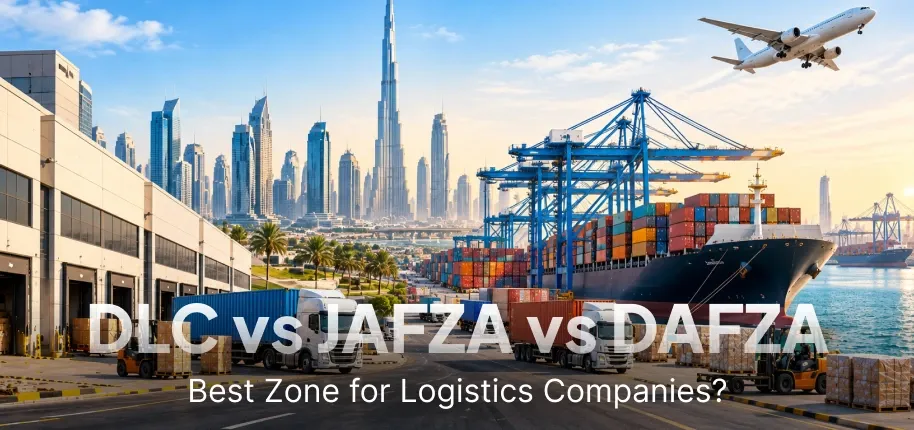
Dubai Airport Freezone – DAFZA – is particularly attractive for startups whose operations benefit from proximity to Dubai International Airport.
DAFZA states that it supports more than 3,400 registered businesses across over 20 sectors and provides direct access to an internationally connected aviation and logistics environment.
Why Choose DAFZA?
Its location makes DAFZA especially relevant to businesses involved in
- Aviation
- Air freight
- Logistics
- Pharmaceuticals
- Technology
- Electronics
- Import and export
- High-value goods
For startups expecting frequent international shipments or operating within aviation-related supply chains, proximity to the airport can provide an important operational advantage.
DAFZA also offers different licence, company and facility options, allowing businesses to select their structure according to operational requirements.
Who Should Consider DAFZA?
DAFZA deserves particular consideration from startups whose business models rely heavily on international connectivity, air cargo, specialised logistics or access to aviation-related businesses.
4. Jebel Ali Free Zone – JAFZA
Jebel Ali Free Zone – JAFZA – is another important option, particularly for startups that expect their operations to involve physical products, international trade, distribution, manufacturing or logistics.
Its strategic position around the Jebel Ali trade and logistics ecosystem makes it particularly relevant to companies requiring access to port infrastructure, warehousing and international shipping routes.
Why Startups Consider JAFZA
JAFZA can be suitable for
- Import and export companies
- E-commerce fulfilment operations
- Logistics companies
- Manufacturers
- Distributors
- Wholesale businesses
- Industrial businesses
- International trading companies
Unlike many service-focused startups that can operate from relatively small offices or flexi-desks, product-based companies may eventually require storage, warehouses or industrial facilities.
Choosing an ecosystem capable of accommodating that growth can prevent the need for a major restructuring later.
5. Meydan Free Zone
Meydan Free Zone is another Dubai option that can appeal to entrepreneurs operating digitally or providing professional services.
Its company formation process is heavily digitalised. Meydan states that businesses can complete applications remotely and offers its Fawri licence for eligible businesses through a rapid digital issuance process.
Suitable Startup Activities
Meydan Free Zone can be relevant to
- Digital entrepreneurs
- Consultants
- E-commerce businesses
- Marketing agencies
- Professional services
- Technology businesses
- Freelance-style business models
For entrepreneurs who prioritise remote setup and digital administration, this type of structure can be particularly convenient.
Comparison of Popular Dubai Free Zones for Startups
| Free Zone | Particularly Relevant To | Major Advantage |
|---|---|---|
| IFZA | Consulting, services, digital businesses | Flexible SME-focused setup |
| DMCC | Trading, tech, professional services | Large international ecosystem |
| DAFZA | Aviation, logistics, pharma, technology | Dubai International Airport connectivity |
| JAFZA | Logistics, manufacturing, trading | Port and warehousing ecosystem |
| Meydan Free Zone | Digital, consulting, e-commerce | Digital-first setup |
The comparison should be treated as a starting point rather than a universal ranking. Business activities, licence permissions and operational requirements should be checked before incorporation.
How to Choose the Right Dubai Free Zone for Your Startup
Choosing a free zone should begin with your business model rather than the advertised licence price.
1. Define Your Business Activity
Determine exactly what your company will do.
A consulting company has very different licensing and facility requirements from a logistics company importing physical products.
2. Compare Permitted Activities
Check whether your intended activities are available under the same licence and whether additional approvals are required.
This becomes especially important when a startup intends to provide several different services.
3. Calculate the Complete Setup Cost
Do not compare free zones solely on licence fees.
Consider
- Registration
- Licence
- Establishment card
- Immigration requirements
- Visa costs
- Medical and Emirates ID expenses
- Workspace
- Additional activities
- Renewals
This gives founders a more realistic understanding of their first-year and recurring expenses.
4. Determine Visa Requirements
A solo founder may initially require only one residence visa, whereas a startup planning to recruit employees may need considerably more.
Check the visa allocation associated with your selected facility or package before incorporation.
5. Consider Workspace Requirements
Digital businesses may only require a flexi-desk or co-working arrangement.
Trading, manufacturing and logistics companies may need physical offices, warehouses or specialised facilities.
6. Think About Future Expansion
Consider where the company could be in three to five years.
A startup expecting to expand into warehousing, international distribution or a larger workforce should choose a free zone capable of accommodating those requirements.
What About Corporate Tax?
Free zone status should not automatically be interpreted as meaning that every company pays zero UAE Corporate Tax.
Under the UAE Corporate Tax framework, a Qualifying Free Zone Person may benefit from a 0% rate on qualifying income when the applicable statutory requirements are satisfied. DMCC itself notes that the 0% treatment relates specifically to qualifying income under UAE Corporate Tax rules.
Startups should therefore assess their activities, customers, income and compliance obligations rather than assuming their tax treatment solely from their free zone location.
Free Zone vs Dubai Mainland for Startups
A free zone is not automatically the right structure for every startup.
Free zones can be highly attractive to entrepreneurs focused on international business, digital services, consulting, specialised sectors or businesses that benefit from a particular free-zone ecosystem.
A Dubai mainland company may make more sense for certain businesses whose operational model depends heavily on activities across the UAE mainland, physical retail locations, particular government contracts or other mainland-specific requirements.
The decision should ultimately be based on where your customers are located, how you will generate revenue and how the business intends to operate.
Steps to Start a Business in a Dubai Free Zone
The precise process varies between authorities, but a typical startup formation involves
- Select your business activity
- Choose the appropriate free zone
- Select your legal structure
- Reserve your company name
- Prepare shareholder documentation
- Submit the incorporation application
- Choose your office or workspace
- Pay registration and licence fees
- Receive your business licence
- Complete visa and banking arrangements where required
Planning these stages before submitting an application can reduce delays caused by unsuitable activities, missing documents or incorrect facility selections.
Conclusion
The best Dubai free zone for a startup depends on what that startup actually needs. IFZA can provide flexibility for SMEs and service businesses, DMCC offers access to a substantial international business ecosystem, DAFZA provides strategic airport connectivity, JAFZA supports logistics and product-based operations, while Meydan Free Zone can appeal to digitally focused entrepreneurs.
Rather than choosing solely according to setup price, founders should compare permitted activities, total annual costs, visa allocations, office requirements, location, banking considerations and future expansion needs.
If you are unsure which structure fits your startup, Contact Us to discuss your proposed activities and identify a suitable route for establishing your company in Dubai.