Dubai’s economy continues to demonstrate resilience as investment, international trade, tourism, and business activity support its expansion. With projections suggesting that economic growth could reach 5.6% before the end of the year, the emirate is reinforcing its position as one of the Middle East’s most attractive destinations for entrepreneurs and international investors. The outlook reflects Dubai’s efforts to diversify its economy, strengthen its infrastructure, and create opportunities across multiple industries. For businesses considering expansion into the UAE, this economic momentum highlights the importance of understanding Dubai’s evolving commercial landscape.
Dubai’s Economic Growth Outlook – What Does 5.6% Mean?
A potential 5.6% growth rate would represent a significant expansion of Dubai’s economic activity, particularly against a backdrop of changing global market conditions.
Economic growth is generally measured through changes in real gross domestic product (GDP), which reflects the value of goods and services produced within an economy.
For Dubai, sustained GDP growth can indicate stronger commercial activity, expanding business operations, and increasing demand across important industries.
However, the projected figure should not be interpreted as guaranteed. Actual economic performance will depend on factors including international trade conditions, investment flows, consumer spending, and developments in the global economy.
Dubai’s diversified economic structure provides an important foundation for continued expansion.
Businesses considering opportunities in the emirate can assess their options through Open a Dubai Company, which provides information about company formation and available business structures.
Key Industries Driving Dubai’s Economic Expansion
Dubai’s economy is supported by several interconnected industries. Rather than relying on a single sector, the emirate has developed a commercial environment that attracts businesses across different markets.
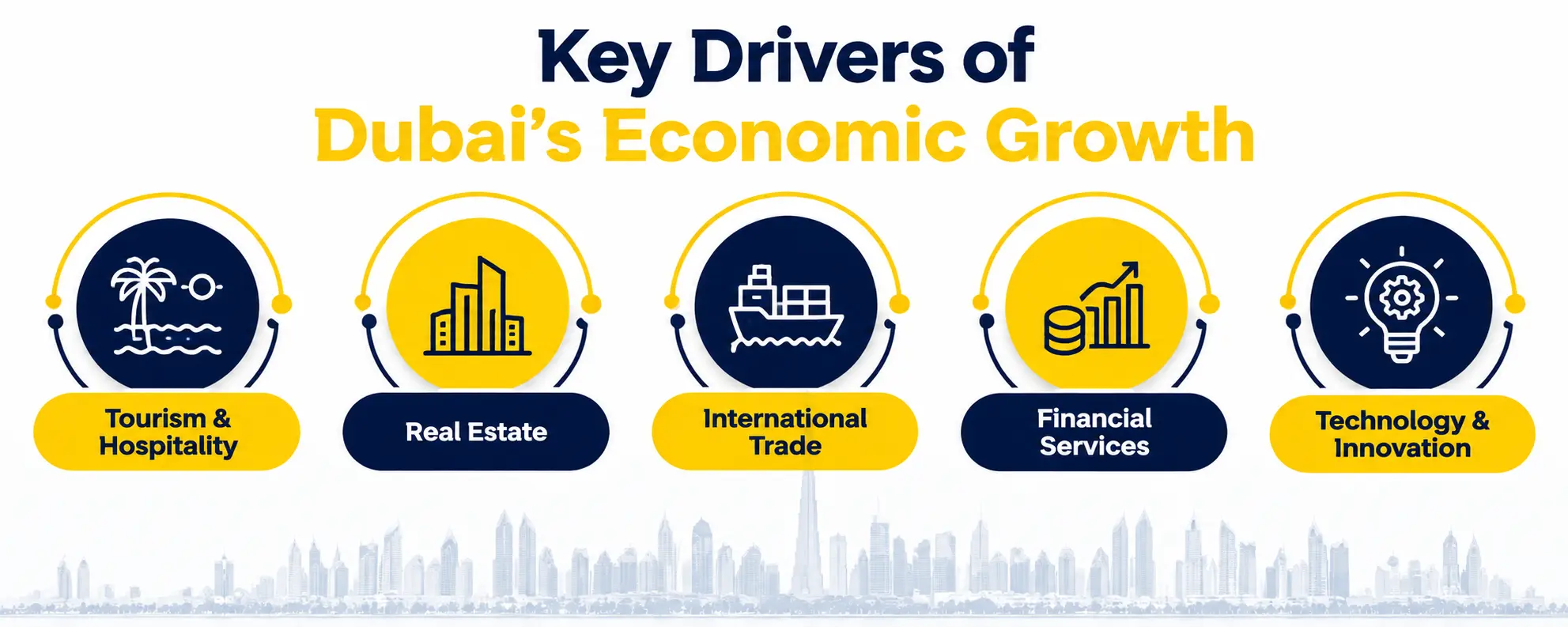
Tourism and Hospitality
Tourism remains an important contributor to Dubai’s economy.
The emirate’s international connectivity, hospitality infrastructure, entertainment attractions, and business events help generate demand for accommodation, restaurants, transportation, and related services.
Continued investment in tourism infrastructure can also create opportunities for entrepreneurs operating in hospitality management, travel services, and supporting industries.
Real Estate and Construction
Dubai’s property market plays a significant role in supporting economic activity.
Residential developments, commercial properties, infrastructure projects, and mixed-use communities contribute to demand across construction and professional services.
Growth in the sector can create opportunities for property management businesses, engineering consultancies, construction suppliers, and real estate service providers.
However, investors should assess property prices, financing conditions, and market demand before making long-term commitments.
International Trade and Logistics
Dubai’s strategic location between Asia, Europe, and Africa makes it an important international trading centre.
Its ports, airports, logistics infrastructure, and established commercial networks support businesses involved in importing, exporting, distribution, and supply chain management.
As international trade develops, companies operating in freight forwarding, warehousing, e-commerce fulfilment, and logistics technology may find additional opportunities.
Also read – Best Free Zones in Dubai for Startups
Financial Services and Technology
Dubai continues to attract financial institutions, technology companies, and professional service providers.
Digital transformation, financial innovation, and demand for business services contribute to the development of these industries.
Companies operating in fintech, cybersecurity, software development, digital consultancy, and financial technology services may benefit from Dubai’s expanding commercial ecosystem.
Why Dubai Continues to Attract International Investors
Dubai’s appeal extends beyond its economic growth figures.
The emirate has developed an environment designed to support international investment, business formation, and commercial expansion.
Several factors contribute to this position.
Strategic International Location
Dubai provides access to regional and international markets through established aviation, maritime, and logistics networks.
This connectivity makes it particularly attractive to businesses managing operations across multiple countries.
Business-Friendly Infrastructure
Modern office developments, industrial facilities, transport networks, and digital government services help businesses establish and manage operations.
Dubai also offers a range of commercial environments suited to different industries and operating requirements.
Diverse Company Formation Options
Entrepreneurs can choose between mainland, free zone, and other permitted company structures depending on their intended activities.
Each option has different licensing, ownership, operational, and regulatory considerations.
For example, businesses planning to serve customers directly across the UAE may assess mainland incorporation, while companies prioritising particular industry ecosystems may consider relevant free zones.
Professional support with Dubai business setup services can help investors compare available structures and identify suitable licensing arrangements.
Government-Led Economic Development
Dubai’s long-term economic planning focuses on strengthening international trade, attracting investment, supporting innovation, and improving business competitiveness.
Initiatives such as the Dubai Economic Agenda D33 provide a broader strategic framework for expanding the emirate’s economic activity.
These developments contribute to investor confidence, although commercial outcomes still depend on individual business models and market conditions.
How Economic Growth Creates Opportunities for New Businesses
Economic expansion can create demand for new products, services, and investment.
For entrepreneurs considering Dubai, several sectors may offer opportunities.
| Business Sector | Potential Opportunities |
|---|---|
| E-Commerce | Online retail, fulfilment, and digital marketplaces |
| Logistics | Warehousing, freight forwarding, and distribution |
| Technology | Software development, AI solutions, and IT consultancy |
| Tourism | Hospitality services, travel management, and events |
| Professional Services | Accounting, consultancy, marketing, and business support |
These opportunities should be evaluated against actual customer demand, competition, operating costs, and regulatory requirements.
A growing economy does not automatically guarantee profitability for every new business.
How to Start a Business in Dubai’s Growing Economy
Entrepreneurs looking to benefit from Dubai’s economic expansion should approach company formation with a clear commercial strategy.
Step 1 – Identify Your Business Opportunity
Research the market and determine whether sufficient demand exists for your proposed products or services.
Consider your target customers, competitors, pricing, and potential operating expenses.
Step 2 – Choose the Right Business Jurisdiction
Compare mainland and free zone options based on your intended activities, customer locations, and business requirements.
The most suitable jurisdiction depends on how the company will operate.
Step 3 – Select Your Business Activity and Licence
Identify the activities your company will undertake and determine the appropriate licensing requirements.
Certain industries may require additional regulatory approvals.
Step 4 – Prepare Company Documentation
Gather the required shareholder information, identification documents, company details, and other supporting records.
Documentation requirements vary according to the selected jurisdiction and legal structure.
Step 5 – Complete Registration and Licensing
Submit the necessary applications, complete the relevant approval procedures, and arrange the required business premises where applicable.
Once approved, the company can proceed with its permitted commercial activities.
Step 6 – Arrange Banking and Operational Requirements
Prepare for corporate banking, tax registration, accounting, employment arrangements, and any additional compliance obligations.
Completing these requirements helps establish a more sustainable operational foundation.
Challenges Businesses Should Consider Before Entering Dubai
Despite its favourable economic outlook, Dubai remains a competitive business environment.
New companies should carefully evaluate several practical considerations.
Operating Costs
Business licence fees, office expenses, employee costs, and other operational requirements vary across jurisdictions.
Market Competition
Established companies and international brands operate across many sectors, making market research essential.
Regulatory Compliance
Businesses must understand applicable corporate tax, VAT, licensing, employment, and reporting obligations.
Banking Requirements
Corporate bank account applications involve due diligence and documentation checks. Incorporation does not automatically guarantee account approval.
Addressing these considerations early can help entrepreneurs avoid unnecessary delays and unexpected expenses.
What Dubai’s Economic Outlook Means for Future Investment
A potential 5.6% economic growth rate would provide another positive signal for Dubai’s investment environment.
Continued expansion could support demand for commercial properties, professional services, technology solutions, logistics infrastructure, and other business activities.
Dubai’s longer-term economic direction also suggests continued emphasis on diversification, international connectivity, and private-sector development.
Nevertheless, investors should distinguish between economic forecasts and confirmed results.
Business decisions should be supported by current market research, financial planning, and an understanding of sector-specific regulations.
Conclusion
Dubai’s economic outlook reflects the emirate’s continued focus on diversification, international investment, infrastructure development, and business expansion.
If growth reaches the projected 5.6%, it would further highlight the strength of Dubai’s commercial environment and the opportunities available across industries such as tourism, logistics, technology, and professional services.
However, successful investment requires more than favourable economic conditions. Entrepreneurs must choose suitable business structures, understand regulatory obligations, and evaluate the financial requirements of entering the market.
For assistance with company formation and selecting the right business jurisdiction, Contact Us to discuss your plans with our business setup specialists