
Dubai has established itself as one of the Middle East’s leading startup hubs, attracting entrepreneurs, investors, and innovative businesses from around the world. Supported by government initiatives, a growing venture capital ecosystem, and access to regional and international markets, the emirate offers numerous funding opportunities for startups at every stage of growth.
Whether you’re launching your first business or preparing to scale an existing venture, securing the right funding can accelerate growth while strengthening your competitive position. However, choosing the right funding option isn’t always straightforward. Government grants, angel investors, venture capital firms, bank loans, and accelerator programmes all have different eligibility criteria, funding amounts, and expectations.
This guide explains the main startup funding options available in Dubai, how they work, and what founders should consider before approaching investors or lenders.
How Startup Funding Works in Dubai?
Startup funding refers to the financial support entrepreneurs receive to launch, operate, or expand their businesses. In Dubai, funding is available through both private investors and government-backed initiatives, creating opportunities for startups across a wide range of industries.
The UAE has developed a supportive entrepreneurial ecosystem through initiatives such as the Dubai Economic Agenda (D33), innovation hubs, free zones, and startup accelerators. Combined with increasing venture capital activity, these programmes continue to strengthen Dubai’s position as a leading destination for startups in the region.
The type of funding you pursue should align with your business objectives, current stage of development, and willingness to exchange equity for capital.
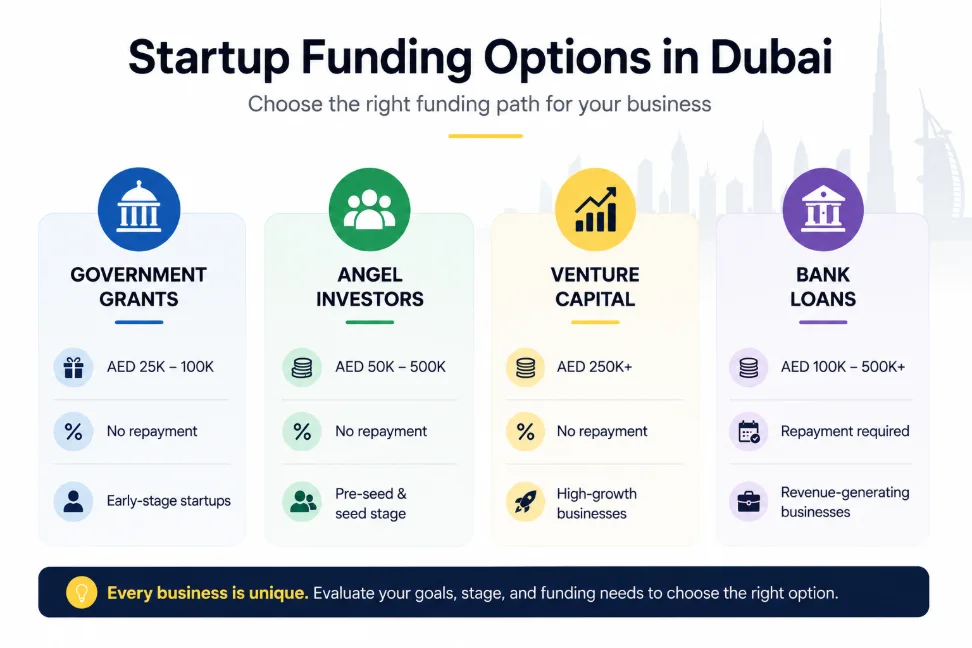
There is no single funding solution suitable for every startup. Below are the four most common funding options available to entrepreneurs establishing or growing a business in Dubai.
Government Grants
Government grants provide financial support to eligible startups without requiring founders to repay the funding or give up ownership in their business. These programmes are often designed to encourage innovation, technology, sustainability, and entrepreneurship across priority sectors. Unlike investment funding, grants generally focus on the potential impact of your business rather than immediate financial returns.
Government-backed initiatives may also provide
- Business mentoring
- Networking opportunities
- Access to innovation hubs
- Training programmes
- Investor introductions
Eligibility requirements vary between programmes, and competition can be high, making a well-prepared application essential.
Angel Investors
Angel investors are individuals who invest their own capital into early-stage businesses in exchange for an ownership stake. Unlike institutional investors, angel investors often become involved during the early stages of a company’s journey, when the business may still be validating its product or entering the market.
Beyond funding, experienced angel investors frequently contribute
- Industry knowledge
- Strategic guidance
- Business connections
- Mentorship
- Future fundraising support
Angel investment is particularly suitable for startups with an innovative idea, a committed founding team, and early signs of market demand.
Venture Capital
Venture capital (VC) firms invest in businesses with strong growth potential in exchange for equity. These firms generally target startups that have already demonstrated product-market fit, customer traction, or recurring revenue.
Venture capital funding can help businesses
- Expand into new markets
- Accelerate product development
- Build larger teams
- Increase marketing activities
- Scale operations
However, VC firms typically conduct extensive due diligence before making an investment and often expect regular reporting and active involvement in the company’s growth strategy. For businesses seeking rapid expansion, venture capital can provide both financial resources and valuable strategic support.
Bank Loans
For startups with an established revenue stream, bank financing may provide an alternative to equity investment. Unlike venture capital or angel funding, bank loans allow founders to retain ownership of their company while accessing the capital needed for growth.
Bank financing may be suitable for businesses looking to
- Purchase equipment
- Expand operations
- Increase working capital
- Hire additional staff
- Finance inventory
Lenders generally assess factors such as financial performance, cash flow, business plans, and repayment capacity before approving an application. Although loan repayments must be made regardless of business performance, this option enables founders to preserve full ownership of their company.
Comparing Your Funding Options
| Funding Type | Equity Required | Repayment Required | Best For |
| Government Grants | No | No | Early-stage startups and innovative businesses |
| Angel Investors | Yes | No | Startups seeking capital and mentorship |
| Venture Capital | Yes | No | High-growth businesses ready to scale |
| Bank Loans | No | Yes | Revenue-generating businesses requiring expansion capital |
Each funding option offers different advantages. While grants and loans allow founders to retain ownership, equity funding often provides additional expertise and industry connections that can support long-term growth.
Leading Startup Investors and Support Programmes
Dubai’s startup ecosystem is supported by a combination of private investors, venture capital firms, and government-backed initiatives that help businesses access funding and strategic guidance.
Some well-known organisations supporting startups in the UAE include
-
BECO Capital
BECO Capital is one of the region’s leading venture capital firms, investing in high-growth technology businesses across sectors such as fintech, software, and digital commerce.
-
Wamda Capital
Wamda Capital focuses on early and growth-stage technology companies across the Middle East and North Africa, providing both funding and operational support.
-
Shorooq Partners
Shorooq Partners invests in startups across multiple industries, with a strong focus on fintech, software, and emerging technologies.
-
Dubai Future District Fund
Supported by the Dubai Future Foundation, this initiative helps finance innovative businesses that contribute to Dubai’s future-focused economy.
-
DIFC Innovation Hub
The DIFC Innovation Hub provides startups with access to investors, mentorship, networking opportunities, and specialised programmes, particularly for fintech and technology businesses.
- Hub71
Although based in Abu Dhabi, Hub71 supports startups from across the UAE through funding opportunities, business incentives, and access to a global network of investors and corporate partners.
How to Prepare Before Seeking Startup Funding?
Before approaching investors or applying for funding, it’s important to ensure your business is investment ready. Whether you’re seeking a government grant, angel investment, venture capital, or a bank loan, preparation can significantly improve your chances of success. Most investors will expect you to demonstrate that your business has a clear strategy, understands its market, and has the potential to grow sustainably.
Here are some of the key areas to focus on before seeking funding
-
Develop a Strong Business Plan
Your business plan should clearly explain your business model, target market, revenue strategy, competitive advantage, and financial projections. Investors want to understand not only what your business does, but also how it plans to generate long-term value.
-
Build a Professional Pitch Deck
A concise and well-structured pitch deck helps communicate your business opportunity effectively. It should highlight
- The problem you’re solving
- Your solution
- Target market
- Business model
- Market traction
- Financial projections
- Funding requirements
-
Demonstrate Market Validation
Investors are more likely to support businesses that can demonstrate demand for their products or services. Evidence such as paying customers, pilot projects, user growth, or strategic partnerships can strengthen your funding application.
- Organise Your Financial Information
Prepare accurate financial records, forecasts, and budgets before beginning discussions with investors or lenders. Clear financial information demonstrates professionalism and helps build confidence in your business.
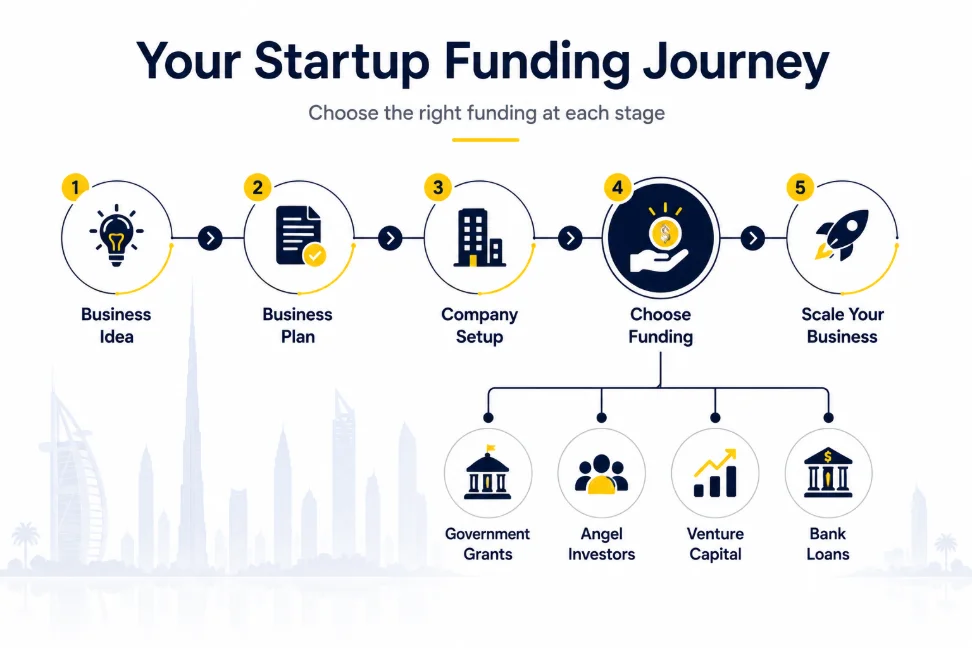
The Startup Funding Process
While each funding source follows its own procedures, most startup funding applications follow a similar process.
1. Identify the Right Funding Source
Choose the funding option that best matches your business stage, industry, and growth objectives.
2. Prepare Your Documentation
Gather the documents commonly requested by investors or lenders, including your business plan, pitch deck, financial forecasts, company registration documents, and supporting information.
3. Submit Your Application or Pitch
Depending on the funding source, this may involve submitting an online application, pitching to investors, or participating in accelerator programmes.
4. Due Diligence
If investors are interested, they will typically review your financial information, business model, legal structure, and growth plans before making a decision.
5. Receive Funding
Once terms have been agreed, legal documentation is completed and the funding is released, allowing you to invest in growing your business.
Common Mistakes to Avoid
Many startups struggle to secure funding because they make avoidable mistakes during the application process.
Some of the most common include
- Approaching investors before validating the business idea.
- Applying for funding that doesn’t match the company’s stage of growth.
- Submitting incomplete financial information.
- Failing to clearly explain the business model or revenue strategy.
- Overestimating business valuations without supporting evidence.
- Waiting until cash flow becomes critical before seeking funding.
Taking time to prepare and choosing the right funding pathway can significantly improve your chances of success.
Why Choose OADC for Your Dubai Business Setup?
Many investors and funding organisations prefer working with businesses that have a properly established legal structure and comply with UAE regulations. At OADC, we help entrepreneurs establish businesses across Dubai’s Mainland, Free Zones, and Offshore jurisdictions, providing end-to-end support throughout the company formation process.
Our services include
- Dubai company formation
- Free Zone company setup
- Mainland company formation
- Offshore company formation
- Trade licence applications
- Corporate structuring
- VAT registration and accounting
- Trademark registration
- Legal documentation
- Ongoing compliance support
Whether you’re launching a new startup or preparing your business for investment, our experienced team can help you build a strong foundation for growth.
Conclusion
Dubai offers one of the region’s most dynamic startup ecosystems, supported by government initiatives, private investors, venture capital firms, and business-friendly regulations. Understanding the different funding options available and preparing your business before approaching investors can significantly improve your chances of securing the capital you need.
Choosing the right funding source is only one part of the journey. Establishing the correct business structure, maintaining regulatory compliance, and presenting a professional, investment-ready business are equally important for long-term success. If you’re planning to launch or expand your business in Dubai, OADC can help you establish the right legal foundation and guide you through every stage of your company formation journey. Contact our team today to discuss the most suitable business setup solution for your goals.