Dubai Multi Commodities Centre (DMCC) has established itself as one of the world’s leading free zones, attracting entrepreneurs, SMEs, and multinational companies looking to establish a presence in the UAE. While its strategic location, modern infrastructure, and business-friendly environment make it an attractive destination, choosing the right legal structure and understanding ongoing compliance obligations are equally important for long-term success.
Selecting an appropriate company structure determines how your business operates, who owns it, and the legal responsibilities it must fulfil. Similarly, maintaining compliance with DMCC regulations helps businesses avoid penalties, maintain their licences, and build credibility with customers, investors, and financial institutions.
This guide explains the legal structures available within DMCC, ownership rules, and the key compliance requirements every business should understand before setting up or expanding in the free zone.
What is DMCC?
The Dubai Multi Commodities Centre (DMCC) is one of Dubai’s largest and most established free zones, providing a business-friendly environment for companies across a wide range of industries. Originally created to support commodity trading, DMCC has grown into a global business hub that accommodates businesses operating in sectors such as technology, professional services, finance, logistics, consulting, manufacturing, retail, and e-commerce.
Located in the Jumeirah Lakes Towers (JLT) district, DMCC offers businesses access to world-class infrastructure, flexible office solutions, and a strategic location connecting markets across Europe, Asia, and Africa.
Many entrepreneurs choose DMCC because it offers
- 100% foreign ownership
- Modern business facilities
- A well-established regulatory framework
- A wide range of licensed business activities
- Access to international markets
- A supportive business ecosystem
However, selecting the right legal structure remains one of the most important decisions when establishing a company in DMCC.
Understanding DMCC Legal Structures
DMCC offers different legal structures to accommodate varying business models and expansion strategies. Choosing the right option depends on factors such as ownership preferences, operational requirements, and long-term business objectives.
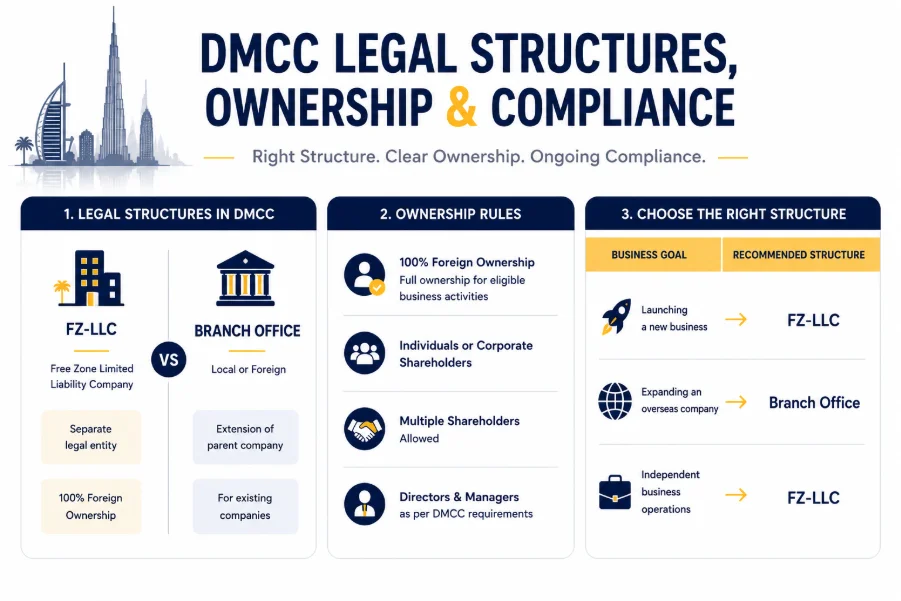
Free Zone Limited Liability Company (FZ-LLC)
The Free Zone Limited Liability Company (FZ-LLC) is the most common legal structure for businesses establishing a new presence within DMCC.
An FZ-LLC is a separate legal entity, meaning the company operates independently from its shareholders. This structure provides limited liability protection, helping safeguard shareholders’ personal assets from business liabilities.
An FZ-LLC is suitable for
- Startups
- SMEs
- International businesses
- Trading companies
- Professional service providers
- Technology businesses
- Consulting firms
Benefits of an FZ-LLC
- Separate legal identity
- Limited shareholder liability
- 100% foreign ownership
- Flexible ownership structure
- Suitable for a wide range of licensed activities
For businesses launching a new operation in Dubai, an FZ-LLC is often the preferred choice due to its flexibility and legal protection.
Branch Office
Businesses with an existing legal entity can establish a Branch Office within DMCC instead of incorporating a separate company. A branch office is not considered an independent legal entity. Instead, it operates as an extension of its parent company and carries out business activities under the parent company’s ownership.
DMCC allows both
- UAE company branches
- Foreign company branches
A branch office is generally suitable for organisations that wish to expand into Dubai while maintaining centralised management under their existing company.
Benefits of a Branch Office
- Faster market entry
- No separate share capital requirements
- Operates under an existing business
- Suitable for international expansion
However, because a branch is not legally separate, the parent company generally remains responsible for its obligations.
DMCC Ownership Rules
One of the key advantages of setting up a business in DMCC is the ability for foreign investors to retain complete ownership of their company.
100% Foreign Ownership
Unlike many jurisdictions that historically required local ownership, DMCC allows eligible businesses to be fully owned by foreign individuals or corporate entities. This provides entrepreneurs with greater control over business operations, strategic decisions, and future growth.
Individual Shareholders
A DMCC company may be owned by one or more individual shareholders, subject to DMCC’s incorporation requirements. Shareholders may be UAE residents or foreign nationals.
Corporate Shareholders
DMCC also permits companies to hold shares in another DMCC company.
This flexibility supports
- Holding companies
- International group structures
- Regional expansion strategies
- Corporate investment structures
Corporate shareholders are generally required to provide supporting legal documentation during incorporation.
Multiple Shareholders
An FZ-LLC can have multiple shareholders, making it suitable for
- Business partnerships
- Joint ventures
- Investment-backed businesses
- Family-owned companies
Ownership percentages are determined during incorporation and recorded in the company’s constitutional documents.
Directors and Managers
Every DMCC company must appoint the individuals responsible for managing its operations. Depending on the business structure, this may include
- Directors
- Managers
- Authorised signatories
These appointments help ensure the company has clearly defined management responsibilities and governance arrangements.
Ultimate Beneficial Ownership (UBO)
DMCC companies are required to maintain information regarding their Ultimate Beneficial Owners (UBOs) in accordance with applicable UAE regulations. A UBO is generally the individual who ultimately owns or controls the company, either directly or indirectly. Maintaining accurate ownership information supports transparency and helps businesses meet regulatory obligations.
Choosing the Right Legal Structure
Selecting the right legal structure depends on your business objectives, ownership preferences, and expansion plans.
| Business Requirement | Recommended Structure |
| Launching a new business | FZ-LLC |
| Expanding an overseas company | Branch Office |
| Independent business operations | FZ-LLC |
| Operating as an extension of an existing company | Branch Office |
Before deciding, businesses should also consider factors such as future investment plans, operational flexibility, management requirements, and long-term compliance obligations.
DMCC Compliance Requirements
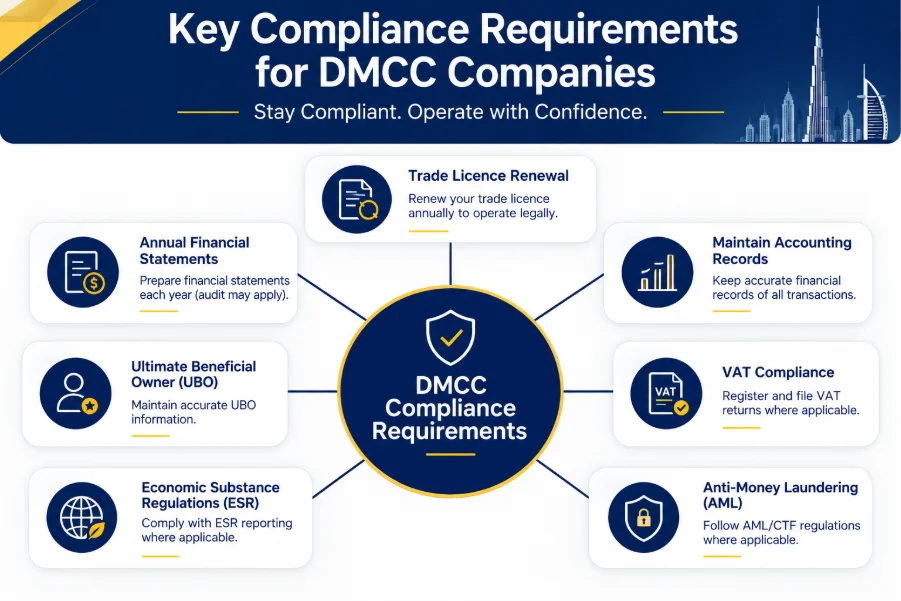
Establishing a company in DMCC is only the beginning. To maintain good standing and continue operating legally, businesses must comply with a range of ongoing regulatory and administrative requirements. Staying compliant helps avoid penalties, supports smooth business operations, and enhances credibility with customers, investors, and financial institutions.
Trade Licence Renewal
Every DMCC company must renew its trade licence annually to continue operating legally. Licence renewals should be completed before the expiry date, along with any required supporting documentation and applicable fees. Keeping your licence active ensures uninterrupted business operations and continued access to DMCC services.
Maintaining Accounting Records
All DMCC companies are required to maintain accurate accounting records that reflect their financial position and business activities. Proper record-keeping supports effective financial management and helps businesses meet regulatory obligations.
Accounting records typically include
- Sales and purchase records
- Bank statements
- Financial transactions
- Invoices and receipts
- Payroll records (where applicable)
Maintaining organised financial records also makes future audits, tax filings, and business reporting significantly easier.
Annual Financial Statements
DMCC companies are generally required to prepare annual financial statements in accordance with applicable accounting standards. Depending on the company’s activities and regulatory requirements, audited financial statements may also be required. Preparing financial statements annually helps businesses
- Monitor financial performance
- Support investment opportunities
- Meet regulatory obligations
- Improve financial transparency
Maintaining complete and accurate financial statements not only supports regulatory compliance but also strengthens business credibility with banks, investors, and other stakeholders. Regular financial reporting enables informed decision-making and helps businesses identify opportunities for sustainable growth.
Ultimate Beneficial Owner (UBO) Compliance
Companies operating within DMCC must maintain accurate records of their Ultimate Beneficial Owners (UBOs). Businesses are responsible for ensuring ownership information remains current and notifying DMCC of any relevant changes where required. Maintaining accurate UBO records supports corporate transparency and helps businesses comply with UAE regulatory requirements.
Economic Substance Regulations (ESR)
Certain businesses carrying out specific activities may be subject to the UAE’s Economic Substance Regulations (ESR). Where applicable, companies must assess whether they fall within the scope of these regulations and fulfil any required reporting obligations. Businesses should seek professional advice to determine whether ESR requirements apply to their operations.
VAT Compliance
Businesses that meet the UAE’s VAT registration requirements must comply with the regulations issued by the Federal Tax Authority (FTA).
This may include
- VAT registration
- Issuing compliant tax invoices
- Filing VAT returns on time
- Maintaining VAT records
- Paying VAT liabilities when due
Timely VAT compliance helps businesses avoid penalties and maintain good standing with the tax authorities.
Anti-Money Laundering (AML) Requirements
Depending on the nature of their activities, certain DMCC businesses may also be required to comply with Anti-Money Laundering (AML) and Counter-Terrorist Financing (CTF) regulations. Where applicable, businesses should establish appropriate internal policies, customer due diligence procedures, and record-keeping processes to meet regulatory obligations.
How OADC Can Help?
Navigating DMCC regulations can be complex, particularly for first-time entrepreneurs and international investors. OADC provides comprehensive support throughout the entire business setup journey, from selecting the most suitable legal structure and incorporating your company to securing trade licences and meeting ongoing compliance requirements. Our team also assists with VAT registration, accounting services, trademark registration, legal documentation, and corporate compliance, ensuring your business remains compliant with the latest UAE regulations. Whether you’re launching a new venture or expanding an existing business into Dubai, OADC offers the expertise and guidance needed to help you establish and grow with confidence.
Conclusion
Choosing the right legal structure is one of the most important decisions when establishing a business in DMCC. Whether you operate as an FZ-LLC or a Branch Office, understanding ownership rules and meeting ongoing compliance obligations are essential for protecting your business and supporting future growth.
By maintaining accurate financial records, renewing licences on time, and complying with applicable regulatory requirements, businesses can operate confidently within one of Dubai’s leading free zones.
If you’re planning to establish or expand your business in DMCC, OADC experts can help you choose the most suitable legal structure, complete your company formation, and ensure your business remains compliant every step of the way.