Dubai’s hospitality industry is entering another significant phase of growth. Strong tourism demand, new hotel openings, international investment, expanding aviation connectivity, world-class events, and continued government support are reinforcing the emirate’s position as one of the world’s leading destinations for leisure and business travel.
The hospitality push is about more than adding hotel rooms. Dubai is developing a broader visitor economy encompassing luxury resorts, restaurants, entertainment, business events, technology, sustainable tourism, serviced accommodation, and new guest experiences. For entrepreneurs and investors, this expansion creates opportunities across both hospitality and the many industries that support it.
Dubai Tourism Continues to Break Records
Dubai welcomed 19.59 million international overnight visitors during 2025, representing 5% growth from the 18.72 million recorded in 2024. December 2025 also became the first month in which Dubai received more than two million international visitors.
Strong visitor numbers support hotels, restaurants, attractions, transport operators, retailers and numerous service businesses. Entrepreneurs looking to participate in this expanding economy can setting up a business in Dubai and determine where their business model fits within the wider visitor economy.
Dubai’s Hotel Industry Is Expanding
Dubai ended 2025 with 154,264 hotel rooms across 827 establishments. The city also welcomed several notable properties during the year, including Ciel Dubai Marina, Jumeirah Marsa Al Arab, Mandarin Oriental Downtown Dubai, Cheval Maison – Expo City and Vida Dubai Mall.
Performance remained strong even as inventory expanded –
- Average occupancy – 80.7%
- Occupied room nights – 44.85 million
- Average stay – 3.7 nights
- Average Daily Rate – AED 579
- Revenue per Available Room – AED 467
The combination of growing supply and high occupancy demonstrates why hospitality continues to attract business and investment interest.
Why Dubai Is Making a Big Hospitality Push
Dubai’s hospitality expansion supports its wider economic strategy. Tourism attracts international spending while stimulating aviation, restaurants, entertainment, retail, property, events and professional services.
The sector is also relevant to the Dubai Economic Agenda D33, which seeks to strengthen Dubai’s position among the world’s leading cities. Hotels and tourism accounted for 21.3% of estimated FDI capital flows into Dubai during the first half of 2025, according to data cited by Dubai’s Government Media Office.
Hospitality Is More Than Luxury Hotels
Luxury remains an important part of Dubai’s identity, but its hospitality market serves a much wider audience. Visitors include business travellers, families, conference delegates, long-stay guests, digital professionals and budget-conscious tourists.
This creates demand across different segments –
| Hospitality Segment | Business Opportunity |
|---|---|
| Luxury hotels | Premium experiences and high-end services |
| Mid-market hotels | Business and leisure travellers |
| Serviced accommodation | Long stays and corporate travellers |
| Restaurants | International visitors and residents |
| Events | Conferences, exhibitions and incentives |
| Hospitality technology | Booking, payments and guest services |
| Tourism services | Tours, transport and experiences |
This diversity reduces reliance on any single visitor profile and creates more entry points for entrepreneurs.
Business Events Are Supporting Hospitality Demand
Business tourism is another important part of Dubai’s strategy. Dubai Business Events secured 249 successful bids during the first half of 2025 for conferences, congresses and incentive programmes expected to attract more than 127,000 delegates in future years.
Business visitors create demand for hotels as well as meeting venues, catering, transport, event management, technology, marketing and corporate services. This means hospitality growth can benefit companies far beyond traditional tourism businesses.
Aviation Gives Dubai a Major Advantage
Dubai’s global aviation connectivity is central to its hospitality success. Dubai International Airport handled a record 95.2 million passengers in 2025, making it the busiest year in the airport’s history.
For hospitality businesses, extensive international connectivity makes Dubai accessible to visitors from key markets across Europe, Asia, Africa, the Middle East and the Americas. It also strengthens Dubai’s position as a stopover destination, business hub and base for international events.
New Opportunities for Hospitality Entrepreneurs
Dubai’s hospitality expansion creates opportunities without requiring entrepreneurs to invest in a major hotel development.
Potential business areas include
- Restaurants and cafés
- Holiday and tourism services
- Event management
- Catering
- Hotel supplies
- Interior design
- Cleaning services
- Facilities management
- Digital booking platforms
- Hospitality software
- Marketing and content creation
- Transport services
- Guest experience technology
- Recruitment and training
Entrepreneurs can explore professional company formation services in Dubai to determine the appropriate licence and jurisdiction for their intended hospitality-related activity.
Technology Is Changing the Guest Experience
Dubai is also using technology to modernise hospitality. A citywide contactless hotel check-in system was announced in late 2025, designed to allow guests to complete identity verification and check-in procedures digitally through participating hotel platforms.
Technology opportunities are consequently growing around mobile check-in, AI-powered customer service, digital payments, booking platforms, revenue management, smart rooms, personalised experiences and operational automation.
Sustainability Is Becoming More Important
Dubai is increasingly integrating sustainability into tourism and hospitality. In July 2026, the Dubai Department of Economy and Tourism announced that a record 237 hotels had received the Dubai Sustainable Tourism Stamp – a 55% year-on-year increase in recognised properties.
This shift can create opportunities for businesses specialising in energy efficiency, water management, sustainable products, waste reduction, environmental technology and hospitality consultancy.
How to Start a Hospitality Business in Dubai
Entering Dubai’s hospitality sector requires the correct business structure and approvals. Requirements vary substantially depending on whether the business is a restaurant, hotel, tourism operator, consultancy, technology company or another service provider.
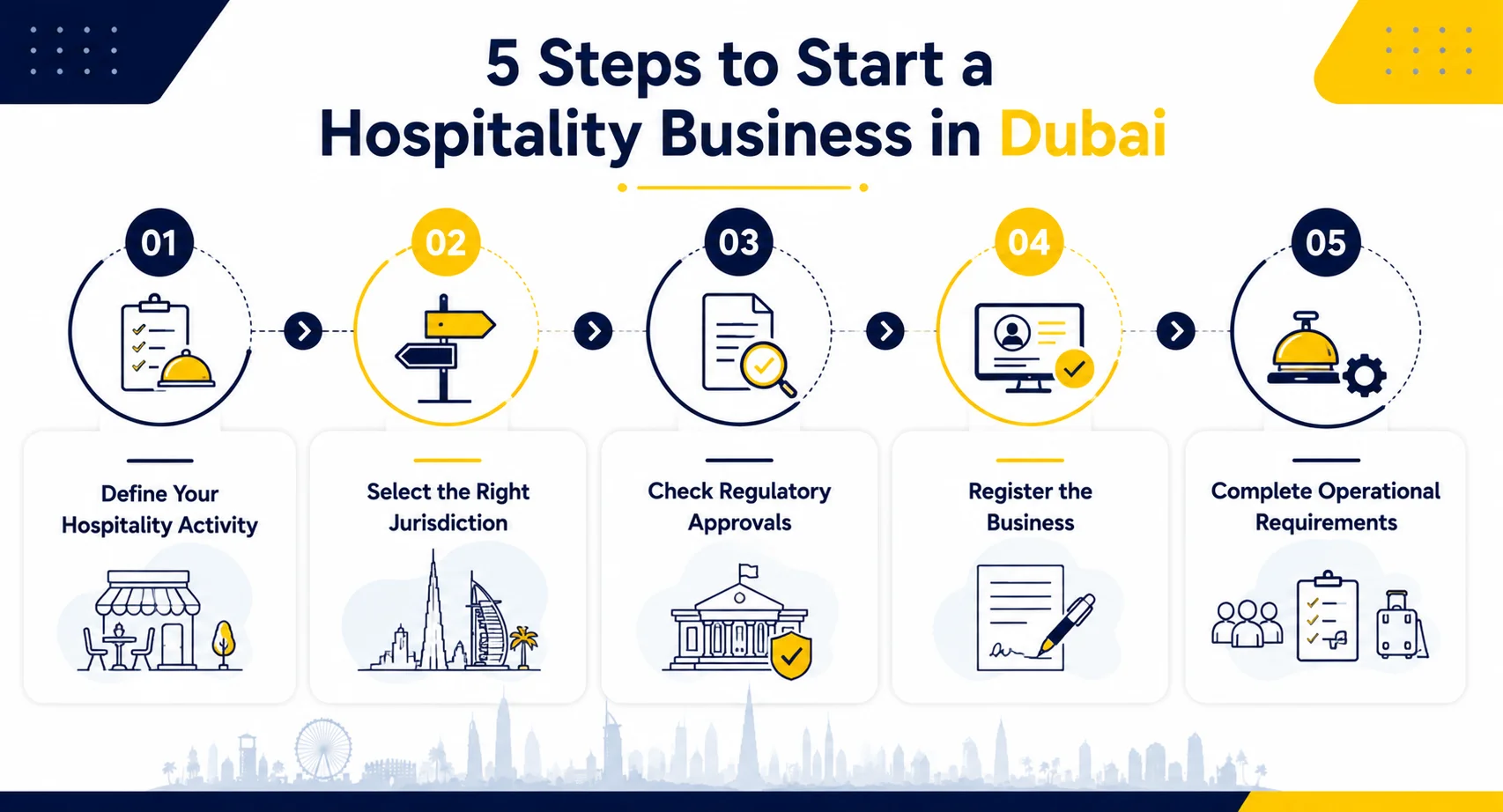
Step 1 – Define Your Hospitality Activity
Determine exactly what your company will provide and identify its customers.
Step 2 – Select the Right Jurisdiction
Compare mainland and free zone structures according to your activities, operating location and market requirements.
Step 3 – Check Regulatory Approvals
Hospitality, tourism, food and accommodation activities can require approvals from relevant Dubai authorities in addition to standard company registration.
Step 4 – Register the Business
Complete trade-name registration, initial approvals, incorporation documentation and licensing requirements.
Step 5 – Complete Operational Requirements
Depending on the activity, this can include premises, visas, banking, tax registration, food approvals, insurance and other compliance requirements.
Professional planning at this stage can help avoid choosing a licence that restricts the company’s intended operations.
Also read – Starting a Hospitality Business in Dubai.
Why 2026 Matters for Dubai Hospitality
Dubai entered 2026 following three consecutive record-breaking years for international overnight visitation. At the same time, the city continues adding hotels, developing business events, improving visitor technology and increasing sustainability standards.
This does not mean every hospitality concept will automatically succeed. Competition is significant. Businesses need a clear target audience, suitable location, correct licence, strong service proposition and realistic financial plan.
Conclusion
Dubai’s big hospitality push reflects the continued expansion of its visitor economy. Record international arrivals, high hotel occupancy, new properties, global aviation connectivity, business events, digitalisation and sustainability initiatives are helping the emirate strengthen its position as an international tourism and hospitality destination.
For entrepreneurs, the opportunity extends far beyond hotels. Restaurants, tourism services, events, technology, maintenance, consultancy and other supporting businesses can all participate in the sector’s growth. If you are considering entering this market, contact our Dubai company formation experts to discuss the right licence, jurisdiction and company structure for your plans.