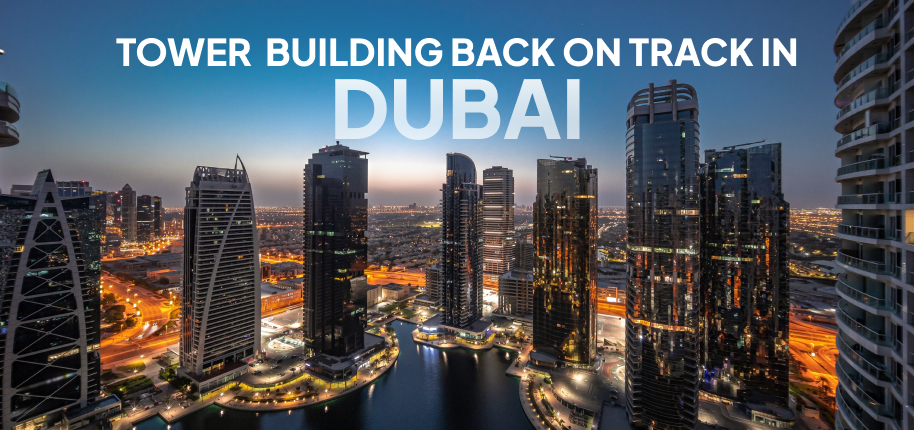
A developer in Dubai has revived a major project to boost the local port by building a $183 million tower in Dubai Maritime City. The development had been long delayed for a variety of reasons, but the Omniyat Group has now resumed work on a 48-storey tower, encouraged by Dubai’s ongoing and sustainable property boom.
Dubai rents have been rising steadily, with prices now reaching the same peak levels seen in 2008. As a result, dozens of building projects across the city have restarted and several new ones have been announced. Mahdi Amjad, chief executive of Dubai’s Omniyat Group, commented on the renewed momentum in the sector:
“I don’t feel there’s oversupply; we will see sustainable growth rather than the large jumps seen in the last two years. You need to focus on the fundamentals and Dubai has demonstrated that its financials are very strong — tourism, trade, the attraction Dubai has globally — Dubai’s real estate market is much more mature than it was before.”
The 225-unit tower in Dubai Maritime City has been valued at 600 million dirhams ($163 million) and is targeted for completion in 2017. Maritime City itself was originally announced in 2003 and expected to be completed by 2012, but the global property crisis caused a significant drop in demand and stalled the project. Current progress now signals a positive shift, highlighting that Dubai is firmly back on a growth trajectory.
For investors observing this resurgence, the broader business environment in Dubai is also becoming increasingly structured and supportive. Entrepreneurs looking to enter the market often begin by reviewing a detailed Dubai business licensing checklist, which helps them understand the regulatory requirements for new ventures. Many also explore strategic free zones such as the Jebel Ali Free Zone, known for its global connectivity and logistics advantages.
Those seeking emerging and cost-effective jurisdictions frequently consider innovation-driven hubs such as RAK Innovation City, particularly suitable for technology-focused businesses. Meanwhile, investors interested in secure international structuring often prefer forming an RAK offshore company, valued for its geographic and economic strengths within the UAE.
The Omniyat tower project is 80–90 percent funded through shareholder equity, bank lending, and off-plan sales. Commenting on future developments, Mr. Amjad added:
“We will be awarding over 2 billion dirhams of construction (contracts) over the next 6–9 months.”
Dubai Maritime City is part of DryDocks World, which restructured $2.2 billion in debt in 2012, and both fall under the Dubai government-owned Dubai World. After several developers failed to build on their allotted plots following the financial crisis, the master plan of Maritime City was redesigned. The updated plan now includes 53 new projects expected to reshape the district.
Amid the city’s renewed pace of development, businesses in the UAE also emphasize community engagement and corporate culture. Seasonal reflections, such as the Christmas message, highlight how companies maintain a positive connection with clients and stakeholders during times of growth.
Omniyat itself is privately held, backed by Dubai-based and Kuwaiti investors, and currently values its portfolio at 12 billion dirhams. The company aims to double that figure by 2020, reflecting the confidence many developers continue to have in Dubai’s long-term outlook.