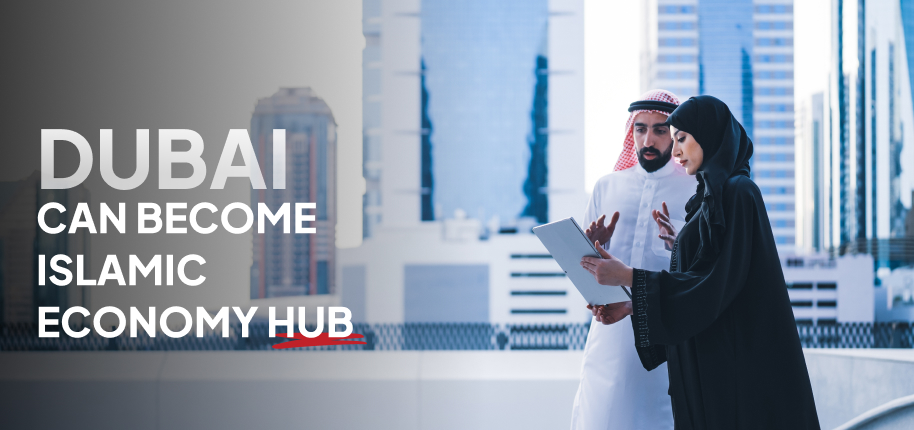
Dubai has spent decades transforming itself into one of the world’s leading destinations for trade, finance, tourism, technology, and international investment. Its next major opportunity lies in strengthening its position as a global Islamic economy hub, connecting businesses with rapidly growing Muslim consumer markets across the Middle East, Asia, Africa, and beyond.
For entrepreneurs looking to set up a business in Dubai, the Islamic economy offers opportunities far beyond traditional Islamic banking. From halal food and Islamic fintech to modest fashion, tourism, cosmetics, pharmaceuticals, logistics, and Sharia-compliant investments, Dubai provides an increasingly diverse ecosystem for businesses seeking regional and international growth.
What Is the Islamic Economy?
The Islamic economy covers businesses, products, and services that operate according to Islamic principles or serve the needs of Muslim consumers. While Islamic banking is one of its most recognised sectors, the wider economy encompasses several fast-growing industries.
Major sectors include
- Islamic banking and finance
- Sukuk and Sharia-compliant investments
- Takaful or Islamic insurance
- Halal food and beverages
- Muslim-friendly tourism
- Modest fashion
- Halal pharmaceuticals and cosmetics
- Islamic fintech and technology
- Media, education, and digital services
This diversity gives Dubai the opportunity to become much more than an Islamic financial centre. It can provide an international marketplace where finance, technology, trade, tourism, and halal industries operate within the same business ecosystem.
Why Dubai Is Well Positioned as an Islamic Economy Hub
Dubai has several competitive advantages that make it an attractive location for Islamic economy businesses. Its strategic position between Asia, Africa, Europe, and the wider Middle East provides companies with convenient access to some of the world’s largest Muslim consumer markets.
Key advantages include
- Strategic access to international markets
- Advanced airports, ports, and logistics infrastructure
- Strong Islamic banking and financial services sector
- Specialised free zones for different industries
- Growing fintech and digital economy
- Established tourism and hospitality industry
- International investor community
- Access to regional halal consumer markets
Entrepreneurs can explore professional company formation services in Dubai to compare mainland, free zone, and offshore structures according to their business activities and expansion plans.
Islamic Finance Is a Major Growth Driver
Islamic finance remains one of the strongest foundations of the UAE’s Islamic economy. The sector includes Islamic banking, Sukuk, Takaful, asset management, Sharia-compliant investment products, and increasingly sophisticated digital financial services.
Dubai is particularly well positioned because it combines international conventional finance with a developed Islamic financial ecosystem. The Dubai International Financial Centre also provides an important environment for financial institutions, fintech businesses, investment companies, wealth managers, and professional service providers.
Key Islamic Finance Opportunities
Businesses and investors can explore opportunities in
- Islamic banking
- Sukuk
- Sharia-compliant investment funds
- Islamic asset and wealth management
- Takaful
- Islamic fintech
- Digital payment solutions
- Crowdfunding and investment platforms
Continued development of these services could strengthen Dubai’s position as a bridge between international capital markets and the global Islamic economy.
UAE Strategy for Islamic Finance and Halal Industries
The UAE has increased its focus on developing Islamic finance and halal industries as part of its broader economic strategy. This creates opportunities not only for major financial institutions but also for startups, SMEs, manufacturers, traders, technology companies, and international investors.
Areas with particularly strong potential include halal production and exports, Islamic investment, digital finance, tourism, modest fashion, technology, and businesses that improve the efficiency and transparency of halal supply chains.
Major Islamic Economy Opportunities in Dubai
Dubai’s diversified economy means businesses can enter the Islamic economy through several different sectors.
| Sector | Potential Business Opportunities |
|---|---|
| Islamic Finance | Fintech, Sukuk, investment, Takaful, wealth management |
| Halal Food | Trading, manufacturing, restaurants, distribution |
| Tourism | Hotels, travel platforms, halal dining, experiences |
| Modest Fashion | Clothing, e-commerce, retail, design |
| Cosmetics | Halal beauty, personal care and wellness |
| Technology | Payments, blockchain, verification, supply chains |
| Logistics | Halal storage, transportation, import and export |
The right opportunity depends on the entrepreneur’s experience, target customers, investment level, and preferred business model.
Dubai Free Zones and the Islamic Economy
Dubai’s free zones are another important part of its competitive advantage. Different jurisdictions have developed specialised ecosystems covering finance, commodities, logistics, media, technology, healthcare, education, and international trade.
Businesses can explore Dubai free zone company formation and select a jurisdiction based on their activity rather than choosing solely according to the lowest setup cost.
For example
- DMCC can suit commodity and international trading activities.
- Dubai Airport Free Zone provides strong international logistics connectivity.
- Dubai Media City supports media and communications businesses.
- DIFC provides an ecosystem for finance and related professional services.
- Dubai Silicon Oasis supports technology-focused businesses.
Entrepreneurs interested in trading can also review our complete guide to setting up a company in DMCC when comparing their options.
Halal Food and International Trade Opportunities
Halal food is one of the most recognisable parts of the Islamic economy, but opportunities extend well beyond restaurants. Dubai’s logistics infrastructure can support companies involved throughout the halal supply chain.
Potential businesses include
- Halal food manufacturing
- Import and export
- Wholesale distribution
- Food packaging
- Cold-chain logistics
- E-commerce
- Food technology
- Certification and traceability solutions
Dubai’s ports and airports can also make the emirate an attractive distribution point for businesses targeting consumers across the GCC, Africa, Asia, and other international markets.
Islamic Fintech and Digital Innovation
Technology could become one of the most important drivers of the next stage of Islamic economy growth. Fintech businesses are already changing how consumers invest, make payments, access financing, and manage wealth.
Opportunities include digital Islamic banking, Sharia-compliant investment platforms, payment technology, Takaful solutions, crowdfunding, blockchain applications, and halal supply-chain verification.
Entrepreneurs entering regulated financial activities should carefully understand the applicable licensing requirements. Our guide to setting up a fintech business in Dubai provides additional insight into establishing a business within this growing sector.
Muslim-Friendly Tourism and Hospitality
Dubai’s established tourism industry gives it a natural advantage in Muslim-friendly travel. Businesses can serve both Muslim travellers and the emirate’s broader international tourism market.
Opportunities include
- Halal restaurants and catering
- Muslim-friendly hotels
- Family-focused tourism
- Travel booking platforms
- Islamic cultural experiences
- Luxury tourism
- Events and exhibitions
Entrepreneurs interested in this market can explore the requirements for starting a hospitality business in Dubai before selecting their licence and business structure.
Modest Fashion, Cosmetics and Lifestyle Businesses
Modest fashion and halal lifestyle products have developed into international consumer markets. Dubai’s luxury retail industry, multicultural population, tourism sector, e-commerce infrastructure, and international events provide brands with multiple opportunities to reach customers.
Potential businesses include modest fashion labels, online stores, cosmetics brands, design studios, import-export businesses, marketing agencies, and beauty or wellness companies. Creative entrepreneurs can also learn how to set up a design studio in Dubai and access the emirate’s wider creative economy.
How to Start an Islamic Economy Business in Dubai
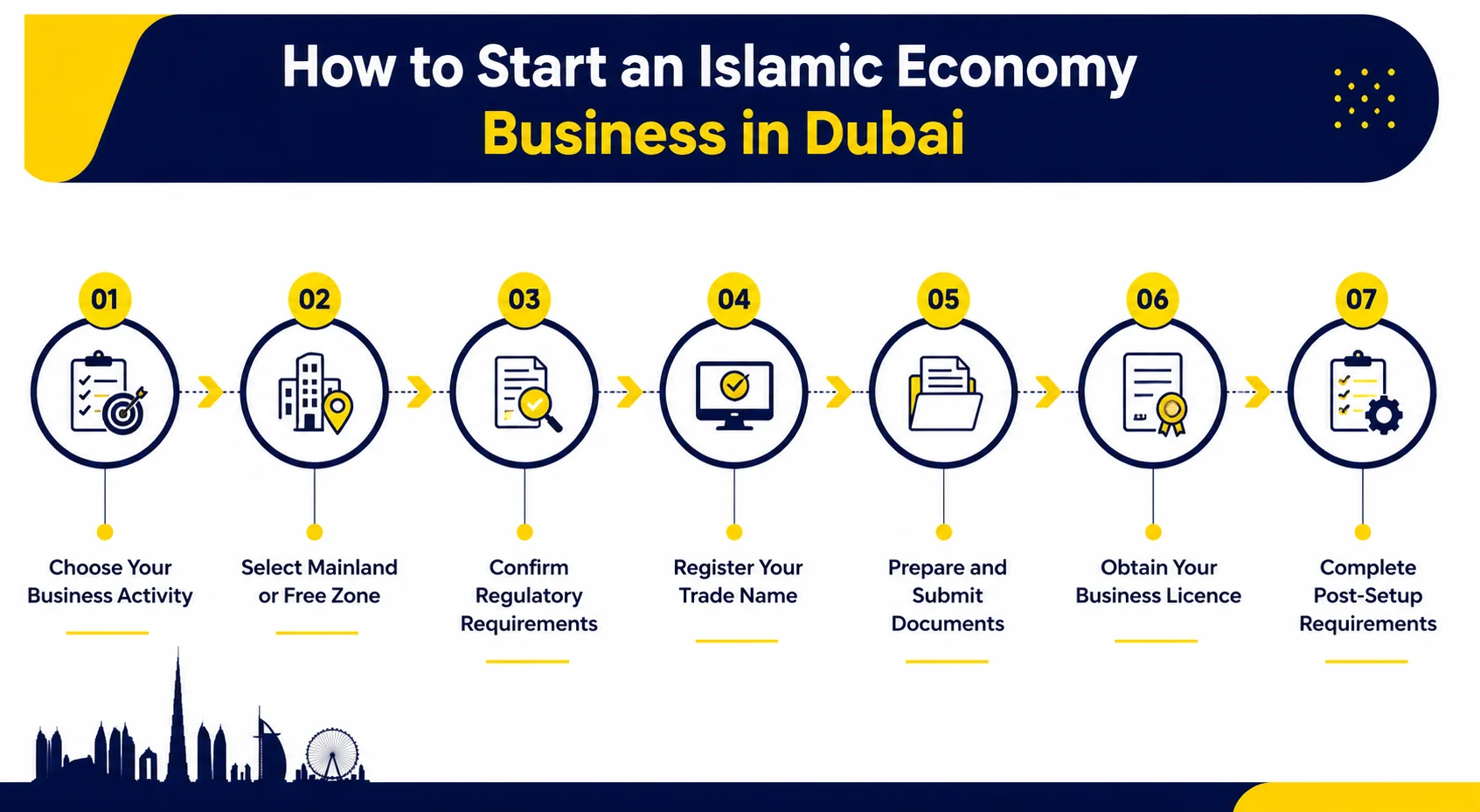
Starting the right company requires more than identifying a profitable sector. Entrepreneurs should make sure their licence, jurisdiction, and regulatory approvals match their intended activities.
Step 1 – Choose Your Business Activity
Identify whether you will operate in finance, trading, halal products, tourism, technology, fashion, consultancy, logistics, or another sector.
Step 2 – Select Mainland or Free Zone
Compare a Dubai mainland company with available free zone options based on your target customers, activities, office requirements, and expansion plans.
Step 3 – Confirm Regulatory Requirements
Check whether your activity requires additional certification or approval. This can be particularly important for
- Financial services
- Investment products
- Food and beverages
- Pharmaceuticals
- Cosmetics
- Healthcare
- Import and export
Step 4 – Register Your Trade Name
Select an acceptable company name and obtain the required initial approval from the relevant licensing authority.
Step 5 – Prepare and Submit Documents
Provide the required shareholder information, incorporation documents, business details, and any additional paperwork requested for your activity.
Step 6 – Obtain Your Business Licence
Apply for the appropriate commercial, professional, industrial, or other licence according to the nature of the business.
Step 7 – Complete Post-Setup Requirements
Once incorporated, complete relevant requirements such as
- Corporate bank account
- Visas
- Tax registration
- Accounting and bookkeeping
- Product or halal certification where applicable
- Ongoing regulatory compliance
Working with experienced company formation professionals can help entrepreneurs identify these requirements before committing significant time or capital.
Mainland vs Free Zone – Which Is Better?
There is no single structure that works for every Islamic economy business. A mainland company may be suitable for businesses that need broader access to customers across the UAE, depending on their licensed activity.
Free zones can be particularly attractive to international traders, fintech companies, technology businesses, logistics operators, and companies looking for a specialised industry ecosystem. The decision should be based on operational requirements, target markets, licensing conditions, and long-term growth rather than setup cost alone.
Compliance and Sharia Requirements
Obtaining a standard commercial licence does not necessarily mean a company can automatically market every product as halal or every financial service as Sharia-compliant. Additional approvals, certifications, or regulatory requirements may apply depending on the industry.
Businesses should establish these requirements before launching, particularly when dealing with financial services, investments, halal food, pharmaceuticals, cosmetics, healthcare, and other regulated products.
The Future of Dubai’s Islamic Economy
Dubai already possesses many of the ingredients required to strengthen its position as a global Islamic economy hub international connectivity, financial infrastructure, free zones, advanced logistics, tourism, technology, access to capital, and a diverse international business community.
As Islamic finance, halal trade, fintech, tourism, fashion, and lifestyle industries continue to develop, Dubai can increasingly act as a bridge between businesses and Muslim consumer markets worldwide. This creates opportunities for corporations, startups, SMEs, investors, and entrepreneurs looking for long-term growth in the UAE.
Conclusion
Dubai’s ambition to become a global Islamic economy hub is supported by its strong financial sector, strategic location, advanced infrastructure, specialised free zones, and expanding opportunities across halal trade, Islamic fintech, tourism, fashion, technology, and professional services. For entrepreneurs and investors, this growing ecosystem offers significant potential to build businesses that serve both UAE and international markets. If you are ready to explore these opportunities, contact our Dubai company formation experts for professional guidance on choosing the right business structure, licence, and jurisdiction for your venture.